Is India Difficult to Travel In? Honest Advice for First-Time Visitors
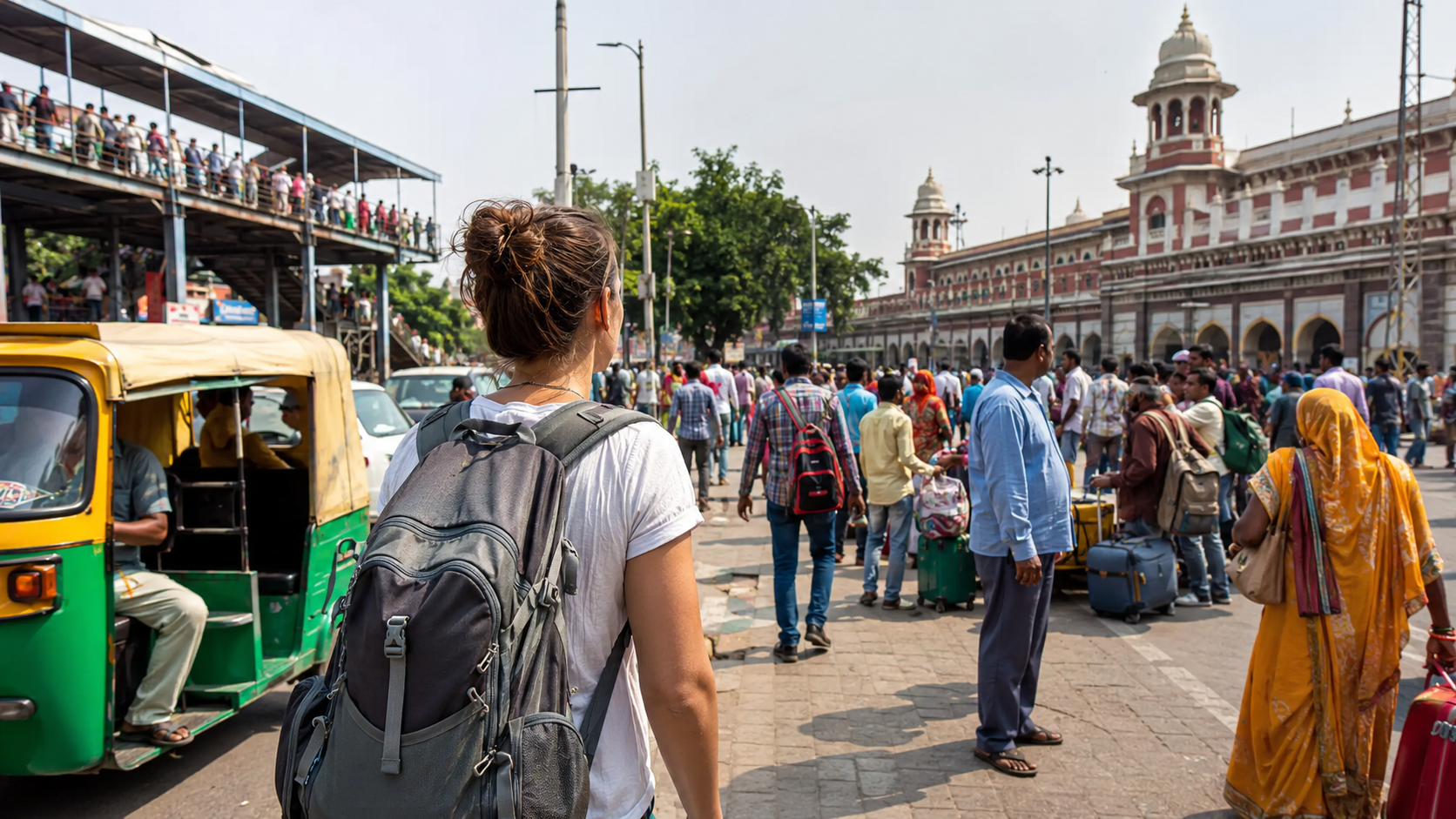
India can feel overwhelming at first, but a slower route and realistic expectations make a big difference.
India has a reputation for being difficult to travel in.
Sometimes that reputation is fair. Sometimes it is exaggerated, nd sometimes the answer depends less on India itself and more on how you plan the trip. A rushed two-week route through Delhi, Agra, Jaipur, Varanasi and several long train journeys will feel very different from a slower trip through Kerala. A first visit in May will feel different from a first visit in February. Travelling with a private driver is not the same as figuring out every transfer yourself.
So the honest answer is this:
India can be difficult. But it is not equally difficult everywhere, and it does not have to be difficult in the same way for every traveller. The key is choosing a route that matches your energy, experience and tolerance for intensity.
Quick answer
India is not the easiest country to travel in, especially for first-time visitors. It can be intense, crowded, noisy, hot, chaotic and emotionally tiring. Transport takes time, cities can be overwhelming, and simple plans do not always stay simple, but India is also much more manageable when you plan realistically.
If this is your first trip, I would avoid trying to see too much. Choose one strong region, travel at a slower pace, and be honest about how much intensity you want.
For a softer first trip, Kerala or Tamil Nadu can be easier than a fast North India route.
For a more classic first trip, Rajasthan and the Golden Triangle can work well, but only if you do not rush them.
India becomes harder when you try to fit too much into too little time.
Why India can feel difficult
India is not difficult for just one reason. It is usually the combination of things that wears travellers down: heat, traffic, noise, crowds, long distances, unfamiliar systems, strong smells, constant attention, delays and decision fatigue.
Individually, these things may be manageable. Together, they can become tiring. That is why many travellers do not struggle with one specific moment. They struggle because there is very little quiet space between moments. A busy station, a delayed train, a hotel misunderstanding, a hot afternoon and a crowded street can all happen on the same day.
That does not make India bad. It just means you need more space in your itinerary than you think.
The biggest mistake: planning India like a checklist
The hardest India trips are often the ones that look most efficient on paper. But travel in India is not just about moving between places. Delhi, Agra, Jaipur, Jodhpur, Udaipur, Varanasi, Amritsar and Kerala may all sound possible if you only look at flight times and train routes.
A realistic India trip should leave room for slow mornings, delayed transfers, heat, crowds, rest and days where you simply do less than planned. This is especially true on a first trip. If you only have two weeks, I would be careful with trying to cover both North and South India unless you are very comfortable with fast travel.
A better first trip is often one focused route done well.
North India can feel more intense
North India is often where first-time visitors begin. That makes sense. Delhi, Agra, Jaipur, Rajasthan and Varanasi include some of India’s most famous places. But North India can also feel intense.
Large cities, traffic, tourist pressure, heat, train stations and long overland distances can make the trip feel demanding, especially if you move too quickly. This does not mean you should avoid North India.
Rajasthan can be a wonderful first India route if you give it enough time. The Golden Triangle can make sense if you understand that it is busy and heavily visited. Varanasi can be powerful, but it should not be added casually at the end of an already exhausting trip.
North India rewards patience and punishes overplanning.
South India can be a softer first trip
For many travellers, South India can feel easier on a first visit, but it’s not what many expects it to be. Kerala is often the softest landing point. Kochi, the backwaters, Munnar, Periyar and the coast can create a trip that feels varied without being as intense as a fast North India route.
Tamil Nadu is different. It is less beach-and-backwater focused and stronger for temples, food, history and regional culture. It can still be busy and hot, but it often gives a more structured South India route than trying to combine too many regions.
South India is not “easy India” in a simplistic way, but for many first-time visitors, it can be a more manageable introduction.
The trade-off is that you miss some of the classic North India sights. If the Taj Mahal, Rajasthan or Varanasi are your main reasons for going, South India may not satisfy that first-trip expectation.
Transport takes more energy than expected
Transport is one of the biggest reasons India can feel difficult. Distances are long, traffic can be slow, trains can sell out, stations can be confusing, and road travel often takes longer than it looks on a map. A four-hour drive may feel longer than expected. A night train can save time but still leave you tired the next day. A domestic flight may look efficient but still involve airport transfers, waiting and delays.
The question is not only:
How do I get there?
It is also:
How much energy will this transfer take?
That question matters a lot in India.
A route with fewer stops is often better than a route with more famous names.
India is harder when the season works against you
Season can change how difficult India feels. A route that feels manageable in February may feel exhausting in May. City sightseeing in extreme heat is very different from travelling in cooler weather. For most first-time visitors, November to March is the easiest period for many classic routes. April, May and early June can be difficult in much of North and Central India because of heat. The monsoon can be rewarding in some places, but it also requires flexibility and slower travel.
This does not mean you cannot travel outside the “best” months. It means you should choose the route more carefully. India is much harder when the weather and itinerary are working against you at the same time.
Food, health and comfort
Food is one of the great joys of travelling in India, but it is also something many travellers worry about. You do not need to be afraid of eating in India, but it helps to be sensible. Choose busy places, be careful with water, and do not treat the first few days as a personal street food challenge.
Comfort also matters more than some travellers expect. India can be tiring, so a good hotel, a quiet room, reliable air conditioning in hot months or a slower travel day can make a big difference. This is not about travelling in luxury. It is about giving yourself enough recovery space to enjoy the trip. A slightly better room in the right place can sometimes improve the whole route more than adding another stop.
Safety and hassle
Safety in India is a broad subject, and experiences vary. Many travellers visit India without serious problems. But harassment, scams, aggressive sales tactics, staring, crowd pressure and uncomfortable attention can be part of the experience, especially in busy tourist areas.
Solo female travellers may need to think more carefully about route choice, accommodation, transport timing and local advice. That does not mean India should be avoided or considered dangerous for solo female travellers. It means the planning should be realistic and not dismissive.
For all travellers, it helps to:
arrive during daylight when possible
avoid overcomplicated first days
book your first nights in advance
use trusted transport at arrival
leave buffer time before important connections
trust your instincts if a situation feels wrong
India is easier when you reduce avoidable stress.
Who India is easier for
India is easier if you are comfortable with uncertainty. It helps if you can laugh when plans change, slow down when needed, and accept that not every day will be smooth. India is also easier if you are genuinely curious, not just chasing famous sights. If you are interested in food, people, religion, history, landscapes, architecture, wildlife or everyday life, then even the difficult parts of travel can feel more worthwhile.
India is not a destination where everything is polished for you. That is part of the challenge. It is also part of why many travellers find it so rewarding including myself.
Who may find India difficult
India may feel especially hard if you want a very predictable holiday. It may also be difficult if you dislike crowds, noise, heat, bargaining, attention or long transfers.
That does not mean you should not go. But it does mean you should choose your first route carefully. If you are unsure, I would not start with the most intense possible itinerary. I would choose a slower route, fewer stops and more comfortable bases. You can always return for a more ambitious trip later.
Practical tips to make India easier
Book your first few nights before you arrive.
Do not make your first day too ambitious.
Avoid very tight transport connections.
Build in rest days or slower days.
Choose fewer stops than you think you can handle.
Pay attention to season.
Use guides where they add context, not just convenience.
Do not feel guilty about choosing comfort sometimes.
Leave room for the trip to change.
The goal is not to remove every challenge.
The goal is to avoid unnecessary ones.
FAQ
Is India too difficult for a first-time traveller?
No! Many people visit India as their first major independent trip and have a good experience. But it helps to choose a realistic route, travel slower than you think, and avoid trying to see too much.
Is North India harder than South India?
Often, yes. North India can feel more intense because of larger cities, crowds, tourist pressure and long distances. South India, especially Kerala, can feel softer for many first-time visitors. But both regions can be easy or difficult depending on the route.
Is India safe to travel in?
Many travellers visit India safely, but it is important to plan carefully, stay aware and check current travel advice before your trip. Safety can vary by region, season, gender, transport choice and time of day.
Is India good for solo travellers?
India can be rewarding for solo travellers, but it is not the easiest solo destination. Solo female travellers in particular should research routes, accommodation and transport carefully and consider using local support when useful.
How many places should I visit in two weeks in India?
For most first-time visitors, fewer than you think. One strong region or a carefully planned route is better than trying to cross the whole country. In two weeks, I would usually choose either North India or South India, not both.
Is Kerala easier than Rajasthan?
Kerala is often easier for a first India trip because the route can feel softer and less intense. Rajasthan has more iconic North India sights, but it can be busier and more tiring if rushed.
Final thoughts
India can be difficult to travel in. But difficulty is not fixed. It depends on your route, season, pace, comfort level and expectations. A rushed trip through too many famous places can feel exhausting. A slower, better planned route can feel rich, surprising and manageable.
The best advice is simple:
Do not try to beat India by planning more. Plan less, choose better, and give yourself enough space to actually experience the places you came to see.
Related guides
Where Should You Go on Your First Trip to India?
India by Season: How to Choose the Right Route for the Month You Travel
North India or South India: Which Should You Visit First?
Kerala Beyond the Backwaters: A Route from Bangalore to Kochi
India Beyond the Obvious: 7 Routes That Are Not Just Rajasthan and Goa
