India by Season: How to Choose the Right Route for the Month You Travel
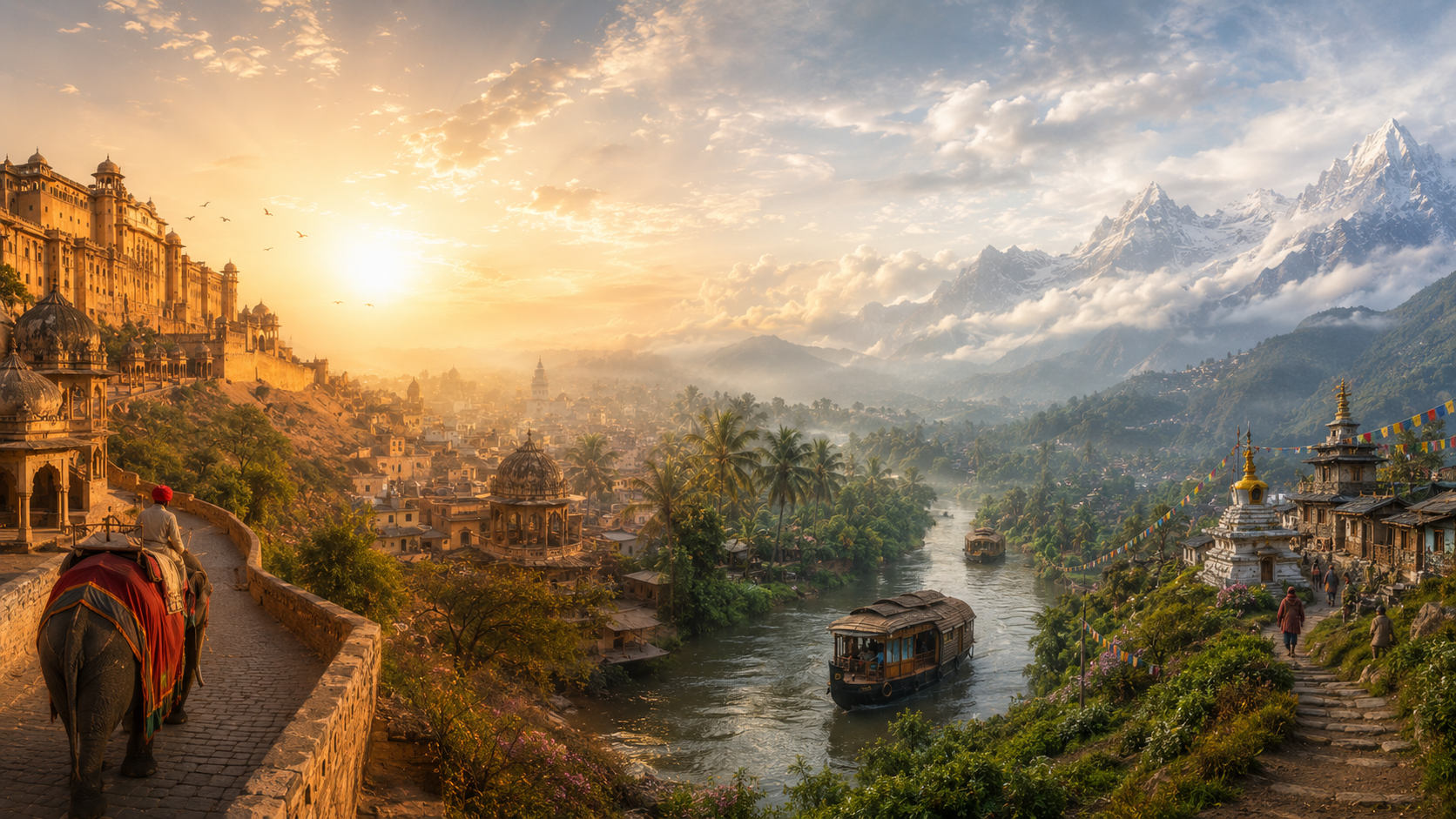
India’s seasons can change the logic of a route completely — from dry desert heat in Rajasthan to monsoon-green backwaters and cooler Himalayan landscapes. AI-assisted illustration.
India is not a country where “the best time to visit” has one simple answer. The right season depends on where you want to go, how much heat you can handle, whether you want mountains or wildlife, and how flexible you are with rain, humidity or festival crowds.
A route that works well in January may feel exhausting in May. Kerala can be lush and atmospheric during parts of the monsoon, while Rajasthan is usually easier in the cooler months. Ladakh may make sense when many lowland areas are too hot, but it comes with altitude and access issues.
I have also learned that India does not always behave exactly as the season charts suggest. I once travelled in Rajasthan in July and did not see a drop of rain for two weeks. On another trip, I was in Kerala in December, usually one of the easiest months to visit, and it rained far more than expected. That does not make season irrelevant. It just means season should guide your planning, not control every decision.
Quick answer
For most first-time visitors, the easiest months to plan an India trip are usually November to March. This is generally the most comfortable period for classic routes through Rajasthan, the Golden Triangle, Kerala, Tamil Nadu, Gujarat, Central India and many wildlife parks. If you are travelling in April, May or June, be careful with North India and Central India. The heat can dominate the trip. These months are often better for mountain routes, hill regions, Ladakh later in the season, or wildlife trips if you accept the heat. If you are travelling during the monsoon, roughly June to September depending on the region, choose a simpler route. Avoid too many transfers and allow for rain, delays and slower travel.
The simplest rule is this:
Choose most classic India routes between November and March. Choose Himalayan routes, Ladakh and monsoon travel more carefully.
Why season matters in India
India is large enough that “good weather” means different things in different places. In the same month, you could have cold mornings in North India, dry desert weather in Rajasthan, humid heat in Kerala, snow in parts of the Himalayas and comfortable temple towns in Tamil Nadu. That is why “best time to visit India” is often too broad to be useful.
A better question is:
Which India route makes sense for this month?
Season affects how hot the trip feels, whether rain may disrupt travel, whether mountain roads are open, how comfortable cities are, whether wildlife parks are open, and whether festivals will shape the experience. Many travellers choose the destination first and think about season later. In India, it often works better the other way around.
November to March: the easiest season for most India routes
For many travellers, November to March is the most practical window for a first trip to India. The weather is generally cooler, overland travel is easier to manage, and city sightseeing is less exhausting than it can be in peak summer.
This is a strong period for:
Rajasthan and the Golden Triangle
Delhi, Agra, Jaipur and Varanasi
Kerala and Tamil Nadu
Gujarat
Central India wildlife routes
Kolkata, the Sundarbans, Darjeeling and parts of Sikkim
Amritsar
If you want a classic first India route, this is the season I would usually choose. If you want Kerala as a softer first trip, this is also a very good window.
The trade-off is that this is also the popular season. Rajasthan, Agra, Varanasi, Kerala and major national parks can be busy. Accommodation and safaris should not be left until the last minute. This season is easier, but it is not empty.
April to June: heat, mountains and careful choices
April, May and early June can be difficult months for many classic India routes. Large parts of North India and Central India become very hot. Travel is still possible, but it changes the feeling of the trip. Walking around forts, temples, markets and cities in the middle of the day can become tiring quickly. This is not the season where I would plan an intense first-time route through Delhi, Agra, Jaipur, Varanasi and Central India unless you already know you handle heat well.
Better choices from April to June include:
parts of the Himalayas
hill stations
Darjeeling and Sikkim, depending on weather
Ladakh later in the season, depending on access
selected wildlife trips if you accept the heat
For wildlife, hotter months can sometimes improve sightings because animals may come to water sources more often. But the experience can be hot, dusty and physically demanding. That is the trade-off. This season can work if you tolerate heat, like early starts, and are not trying to rush between too many cities. It is less suitable if you want an easy first India trip.
June to September: monsoon travel needs a slower route
The monsoon is not one simple thing. It does not arrive everywhere at the same time, and it does not affect every region in the same way. Some places become green and atmospheric. Others may face heavy rain, landslides, humidity, transport disruption or poor visibility.
This is why I would not automatically dismiss a place just because it is technically monsoon season. My July trip in Rajasthan was dry, hot and very manageable in terms of rain. But I still would not describe July as the safest general recommendation for a first Rajasthan trip. Another year, or another route, could feel very different.
During the monsoon, you might consider:
a slower Kerala route
parts of Tamil Nadu
selected city-based trips
Ladakh, depending on access and road conditions
cultural routes with fewer long transfers
Kerala can be beautiful in the monsoon, but it is not the same as travelling there in the dry season. Expect rain, humidity and a slower rhythm. That may be appealing if you want atmosphere and do not need constant sunshine. It may be frustrating if you want beaches, clear views and predictable movement. In the monsoon, less is usually better.
October: a useful transition month
October can be a good month in India, but it is a transition. The monsoon may be ending in many areas, landscapes can still be green, and the main winter season has not fully arrived everywhere. But conditions vary, and some places may still feel humid or unsettled.
Good October options include:
Rajasthan later in the month
Delhi, Agra and Jaipur with heat awareness
Kerala as the weather starts to improve
Tamil Nadu
Gujarat
Kolkata and Eastern India
parts of Central India as conditions improve
October is not as simple as December or January, but it can be rewarding if you plan with some flexibility.
Route ideas by season
If you travel in winter
Winter gives you the most flexibility.
A few realistic winter routes could be:
Classic North India:
Delhi – Agra – Jaipur – Jodhpur – Udaipur
Softer South India:
Kochi – Munnar – Periyar – Backwaters – Varkala or Trivandrum
Tamil Nadu culture route:
Chennai – Mahabalipuram – Pondicherry – Thanjavur – Madurai
Central India route:
Agra – Orchha – Khajuraho – Panna – Varanasi
Eastern India route:
Kolkata – Sundarbans – Darjeeling – Kalimpong or Sikkim
The trade-off is that many of these routes are also popular in winter. You get easier weather, but not empty places.
If you travel in summer
Summer is better for selective route planning. This is when Himalayan routes, hill regions and eventually Ladakh become more appealing than the plains. Wildlife can also be possible if you are prepared for heat.
I would be careful with fast city-heavy routes in North India during May and early June. Delhi, Agra, Jaipur and Varanasi can still be visited, but the heat may shape the whole trip. A better summer route is usually slower, higher or more focused.
If you travel in the monsoon
Monsoon travel works best when the route is simple. Kerala can be lush and atmospheric, but it should not be planned like a dry-season beach trip. Ladakh can be one of the more logical options during parts of this period, but altitude and access still matter. Rajasthan may not always be wet in the monsoon. My own July trip was dry. But I would still be careful about presenting that as normal advice. If you choose Rajasthan in July, do it because you understand the trade-offs, not because you expect the weather to behave exactly as it did for someone else.
If you travel for festivals
Festivals can make a trip more memorable, but they can also make it more complicated. Before planning around Holi, Diwali, Durga Puja, Pushkar Camel Fair, Theyyam or Kerala’s boat races, ask yourself:
Do I understand what the experience involves?
Will transport and accommodation be harder?
Is this a public celebration, a religious ritual, or both?
Would I still enjoy the route if the festival experience is smaller than expected?
Do not plan around a festival only because it looks good in photos. Season is a guide, not a guarantee It is tempting to plan India as if each month has one clear answer. In reality, season is more like a risk filter.
Travelling in Rajasthan in July does not mean you will definitely be rained out. Travelling in Kerala in December does not mean every day will be dry. Weather patterns help you understand what is more likely, not what is certain. That is why I would not use season to make your trip too rigid. Use it to avoid obvious mismatches: a fast city-heavy North India route in peak heat, a tight Himalayan road trip during heavy rain, or a beach-focused Kerala trip when you would be disappointed by wet weather.
The goal is not perfect weather. It is a route that still works if the weather is not perfect.
Common planning mistakes
Choosing the route before checking the season
A route may look perfect on a map but make little sense in the month you are travelling.
Before choosing destinations, check whether the season supports the kind of trip you want.
Treating India as one climate
Kerala, Rajasthan, Ladakh, Sikkim, Tamil Nadu and Central India do not follow the same travel logic.
A good month for one region may be a difficult month for another.
Planning too much movement during the monsoon
Monsoon travel is better when it is slower.
If you have to travel in the monsoon, reduce the number of stops and build in flexibility.
Assuming winter means perfect weather everywhere
Winter is the easiest season for many routes, but it can still bring fog, crowds, cold mornings, high demand in popular places and the occasional weather surprise. It is easier, not effortless.
FAQ
What is the best month to visit India for a first trip?
For most first-time visitors, February is one of the easiest months. The weather is usually comfortable in many regions, and you have many route options. November, December, January and March can also work very well depending on where you go.
Is summer a bad time to visit India?
Not always, but it is a difficult time for many classic routes. April, May and early June can be very hot in North India and Central India. Summer is better suited to mountain routes, selected wildlife trips or travellers who understand the heat trade-off.
Is monsoon a bad time to travel in India?
Not necessarily. Monsoon travel can be atmospheric and rewarding, but it requires simpler routes, flexibility and realistic expectations. It is not the best season for a fast, multi-region first India trip.
When is the best time to visit Rajasthan?
Rajasthan is generally most comfortable from November to March. April to June can be very hot, and monsoon conditions vary. I have travelled in Rajasthan in July without seeing rain for two weeks, but I would still not treat July as the safest general recommendation for a first Rajasthan trip.
When is the best time to visit Kerala?
Kerala is usually easiest for most travellers from November to March. That said, dry season does not guarantee dry weather every day. I have travelled in Kerala in December and had far more rain than expected. The monsoon can also be interesting if you want a slower, greener and more atmospheric trip, but it is not ideal if your main priority is beach weather and predictable movement.
When is the best time for tiger safaris in India?
Many national parks are visited between autumn and spring, but hotter months can sometimes improve wildlife sightings. Park opening dates, permits and safari rules can change, so check current information before planning.
Final thoughts
India rewards travellers who plan with season in mind, but it also rewards travellers who stay flexible. A good India route is not just about choosing famous places. It is about matching your time of year, travel style and tolerance for heat, rain, crowds and movement.
Season will not tell you exactly what every day will be like. It will not guarantee blue skies in Kerala in December or rain in Rajasthan in July. But it can help you avoid the biggest mismatches.
If you only remember one thing, make it this:
Do not ask where you should go in India before asking when you are going. That one question can change the whole route — and often make the trip much better.
Related guides
Still deciding where to start in India? Read:
Where Should You Go on Your First Trip to India?
For more route ideas beyond the classic choices, read:
India Beyond the Obvious: 7 Routes That Are Not Just Rajasthan and Goa
If you are choosing between different parts of the country, read:
