Where Should You Go on Your First Trip to India?
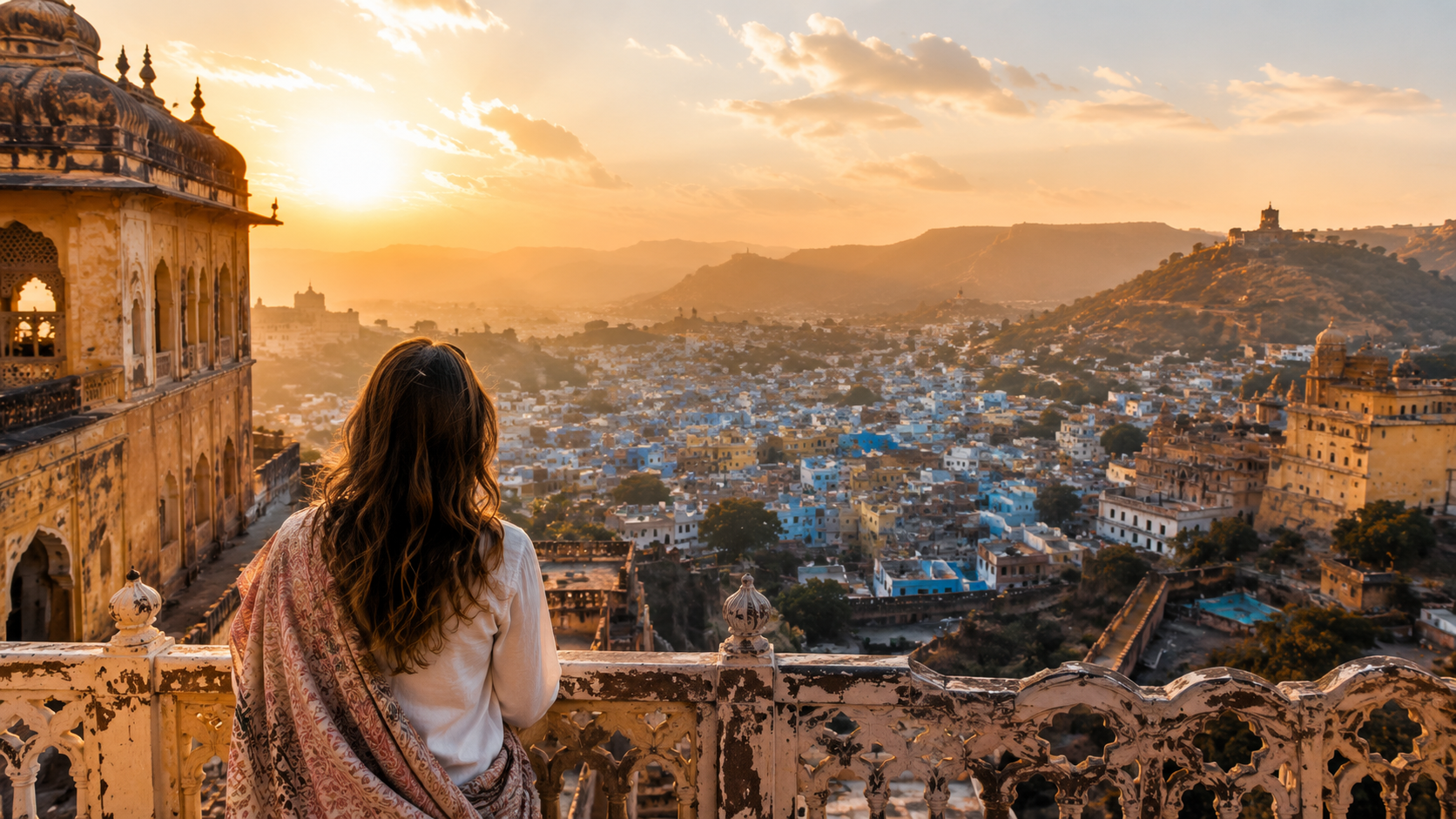
View over a historic city in Rajasthan at sunset
India can feel overwhelming when you start planning your first trip. There are mountains, deserts, beaches, temples, cities, national parks and completely different travel styles depending on where you go.
I think the best place to start is not by asking which destination is “best”, but by asking what kind of trip you actually want.
Do you want classic sights and big cities? A softer first trip with beaches, backwaters and slower travel? Mountains and cooler weather? Wildlife? Food, temples and culture?
This guide is meant to help you choose an India route that fits your time, season and travel style — not just the route that appears most often in first-time India itineraries.
For me, the best first India route is not the one with the longest list of famous places. It is the one you can actually enjoy travelling.
Quick answer
For a first trip to India, the best route depends less on what is “best” and more on what kind of trip you want.
Choose Rajasthan and the Golden Triangle if you want classic sights, historic cities, forts, palaces and a strong first impression of North India.
Choose Kerala if you want a softer first trip with slower travel, greener landscapes, backwaters, beaches and food.
Choose Tamil Nadu if you are interested in temples, South Indian culture and a route that feels rich but often less overwhelming than the busiest North India circuits.
Choose Kolkata, Darjeeling and Sikkim if you want a more unusual first route with city life, tea hills and Himalayan scenery.
Choose Central India if wildlife and national parks are the main reason for your trip.
If you only have two weeks, I would be careful with trying to see too many regions. India rewards slower travel more than rushed checklists.
Who this guide is for
This guide is for you if you are planning your first trip to India and feel unsure where to start.
It is especially useful if you are trying to choose between North India, South India, the Himalayas, wildlife areas or a more unusual route.
It is not meant to rank one part of India above another. It is meant to help you compare the options more clearly.
If I were helping someone plan a first India trip, I would start with time, season, comfort level and pace before choosing specific places.
Best first-trip routes in India
There is no single best route for a first trip to India. A good route depends on how much time you have, when you are travelling and how intense you want the trip to feel.
The options below are not the only possible routes, but they are useful starting points if you are trying to understand what kind of India trip might suit you.
Rajasthan and the Golden Triangle
Best for: classic sights, forts, palaces, historic cities and a strong first impression of North India.
This is the route many first-time visitors imagine when they think of India. It often includes Delhi, Agra, Jaipur and one or more places in Rajasthan, such as Udaipur, Jodhpur or Jaisalmer.
It can be a rewarding first trip if you want architecture, history, busy cities and a route with many well-known highlights.
The trade-off is that it can also feel intense, especially if you try to cover too much in two weeks.
I would choose this route if you actively want the classic North India experience and are prepared for a fairly busy pace.
I would be more careful with it if you are nervous about India, want a very soft landing, or know that you do not enjoy big cities and long travel days.
Rajasthan and the Golden Triangle can be a great first trip. It just works best when you give it enough time and do not try to add half of India on top of it.
Kerala
Best for: a softer first trip, slower travel, greener landscapes, backwaters, beaches and food.
Kerala can be a good first trip to India if you want a gentler introduction. It is still India, and travel is not effortless, but the rhythm can feel calmer than a fast North India circuit.
A typical Kerala route might include Kochi, Munnar, the backwaters around Alleppey or Kumarakom, and one or two beach stops.
I would consider Kerala if you want nature, food, slower days and a gentler introduction to India. It can also work well if you are less interested in forts and palaces and more drawn to landscapes, coast, culture and regional food.
The trade-off is that you will miss many of the classic North India sights, such as forts, palaces and the Taj Mahal.
Kerala is not “better” than Rajasthan. It is simply a different kind of first trip.
For some travellers, that is exactly what makes it the better first choice.
Tamil Nadu
Best for: temples, South Indian culture, food, history and a route that can feel rich without following the standard first-time India circuit.
Tamil Nadu is a strong choice if you are interested in culture, religion, architecture and everyday city life. A route here might include Chennai, Mahabalipuram, Pondicherry, Thanjavur, Madurai and possibly the hill station of Kodaikanal.
Compared with Rajasthan, Tamil Nadu often feels less focused on forts and palaces and more focused on temples, rituals, food and regional culture.
It can still be busy and intense, but in a different way.
I would choose Tamil Nadu if you are curious about South India and do not need your first trip to include the most famous North India sights.
The trade-off is that it may feel less familiar if most of your planning inspiration has focused on Delhi, Jaipur and Agra. But that does not make it a weaker choice. It just makes it a less obvious one.
Kolkata, Darjeeling and Sikkim
Best for: a more unusual first route with city life, tea hills, mountain views and a different side of India.
This route is a good choice if you want your first trip to India to feel less like the standard Delhi–Agra–Jaipur circuit. It might include Kolkata, the tea hills around Darjeeling and parts of Sikkim.
Kolkata gives you a major Indian city with history, food, markets and a slower rhythm than Delhi or Mumbai. Darjeeling and Sikkim add cooler weather, mountain landscapes and a very different cultural setting.
I would choose this route for a first trip only if you are comfortable with a few more moving parts.
The trade-off is that transport can take time, weather matters more in the mountains, and some areas may require permits or extra planning.
This route works best if you are not trying to tick off the most famous India sights. It is for a first trip that feels a little more specific, and a little less obvious.
Central India for wildlife
Best for: wildlife, national parks, tiger safaris and a trip built around nature rather than cities.
Central India is a good choice if wildlife is one of your main reasons for visiting India. A route might include national parks such as Kanha, Bandhavgarh, Pench or Satpura, depending on season, access and availability.
This is not the most obvious first trip to India, and it does not give you the classic forts, palaces or big-city route.
But I would not dismiss it as a first trip if wildlife is genuinely your priority. India does not have to begin with cities and monuments.
The trade-off is that safari planning takes more preparation than a standard city route. Park zones, permits, lodge availability and transport can affect the whole trip, so this is a route where planning ahead matters.
Before travelling, safari rules, park opening dates and permit details should be checked against current official sources.
How to choose the right route
If you want the classic first trip to India, choose Rajasthan and the Golden Triangle.
If you want a softer and slower introduction, choose Kerala.
If you are especially interested in temples, food and South Indian culture, choose Tamil Nadu.
If you want mountains, tea hills and a less obvious route, choose Kolkata, Darjeeling and Sikkim.
If wildlife is the main reason for your trip, choose Central India.
The most important thing is not to combine too many of these routes into one short trip. India is large, transport takes time, and a route that looks efficient on a map can feel rushed in real life.
If I had to give one piece of advice for a first India trip, it would be this: choose the route that fits your actual travel style, not the route that looks most impressive when you list the places afterwards.
Final thoughts
There is no perfect first India route. There is only the route that fits your time, season, comfort level and curiosity best.
For many first-time visitors, Rajasthan and the Golden Triangle are the obvious starting point. For others, Kerala or Tamil Nadu may make more sense. If you are drawn to mountains, wildlife or less standard routes, India also has many options beyond the classic highlights.
The best advice is to be realistic. Choose fewer places, allow more time than you think you need, and plan a route that you will actually enjoy travelling — not just one that looks impressive on paper.
That, to me, is the difference between a first India trip that sounds good and one that actually works.
FAQ
What is the best route for a first trip to India?
For many first-time visitors, Rajasthan and the Golden Triangle are the most obvious starting points because they include famous sights, historic cities and a well-established travel route. But Kerala, Tamil Nadu or a more unusual route may be a better choice if they fit your travel style better.
Is Kerala a good first trip to India?
Yes, Kerala can be a good first trip to India if you want a slower and softer introduction. It is especially worth considering if you are more interested in food, green landscapes, backwaters, beaches and a calmer pace than forts and big North Indian cities.
Should I visit North India or South India first?
Choose North India if you want classic sights, forts, palaces and a stronger first impression of India’s intensity. Choose South India if you want temples, food, slower travel, greener landscapes or a route that may feel less overwhelming.
How many places should I visit in two weeks in India?
For a two-week trip, it is usually better to choose one region and travel at a realistic pace. Trying to combine too many parts of India can make the trip feel rushed, especially when transport times are longer than they look on a map.
Is India difficult to travel in?
India can be challenging, especially on a first trip, but the difficulty depends a lot on where you go, how fast you travel and how much you plan ahead. A slower route with fewer stops is usually easier than a packed itinerary across several regions.
Related guide
If you already know you want something less standard, read:
India Beyond the Obvious: 7 Routes That Are Not Just Rajasthan and Goa
You may also find this useful:
North India or South India: Which Should You Visit First?
If you want to optimize the chance of good weather, read:
India by Season: How to Choose the Right Route for the Month You Travel
