India Beyond the Obvious: 7 Routes That Are Not Just Rajasthan and Goa
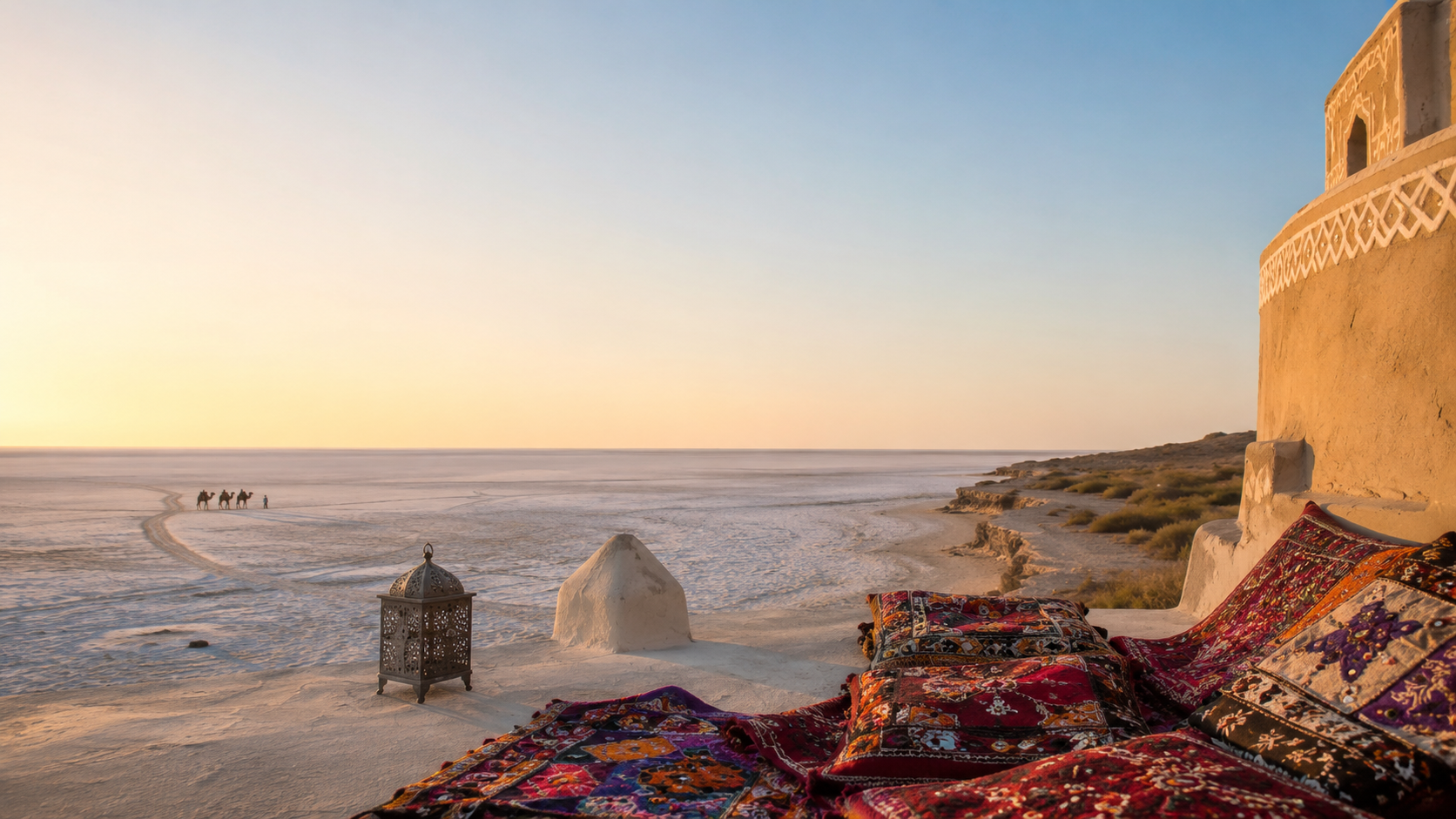
Salt desert landscapes and craft traditions in Gujarat, one of India’s strongest routes beyond the obvious.
India is often reduced to a handful of familiar travel ideas: the Golden Triangle, Rajasthan, Goa, Kerala’s backwaters, maybe Varanasi or Ladakh if you start looking further.
Those places can absolutely be worth your time. Rajasthan has some of India’s most memorable cities. Goa works well if you want beaches and easier travel. Kerala is popular for good reason.
But they are not the only ways to plan a trip to India.
For me, going beyond the obvious is not about avoiding famous places just to be different. It is about choosing a route more deliberately.
If you want to go beyond the obvious highlights, the question is not simply “Where should I go?” A better question is: what kind of India trip actually fits your interests, season, time and comfort level?
This guide gives you seven route ideas that move beyond the standard postcard version of India. Some are good for first-time visitors who want something different. Others are better for a second trip or for travellers who are comfortable with more planning.
Quick answer
If you want a softer but more original South India route, consider Northern Kerala with Wayanad, Kannur and Theyyam.
If you want city life, mangroves, tea hills and Himalayan scenery, look at a route from Kolkata to the Sundarbans, Darjeeling and Sikkim.
If wildlife is your main reason for visiting India, Central India is one of the strongest regions to consider.
If you want temples, food, coastal towns and South Indian culture, Tamil Nadu is a strong alternative to Kerala.
If you want desert landscapes, crafts and lions without following the classic Rajasthan route, Gujarat is worth considering.
If you want the Golden Temple and mountain towns, Amritsar and Himachal can make a rewarding North India route.
If you are interested in Northeast India, Nagaland can be meaningful, but it needs careful planning, respectful framing and local guidance.
Why look beyond the obvious India routes?
The classic India routes are popular for a reason. They are easier to research, easier to book and often easier to explain to other people.
But they can also become a default choice rather than a conscious one.
Many first-time visitors choose Rajasthan or Goa because those are the places they have heard about most often. That does not mean they are wrong choices. It just means they may not be the best fit for every traveller.
India is not one travel experience. It is a large, regionally varied country where the route you choose shapes almost everything: the weather, the pace, the food, the transport, the culture, the level of intensity and the kind of memories you come home with.
A route through Rajasthan feels very different from a route through Tamil Nadu. Central India wildlife is a completely different trip from Kerala’s coast. Kolkata and Sikkim have little in common with Goa.
Looking beyond the obvious is not about avoiding famous places for the sake of it. It is about choosing more deliberately.
That is why I think the route matters so much. The question is not only where you go, but what kind of India you are building your trip around.
1. Northern Kerala: Wayanad, Kannur and Theyyam
Best for: travellers who like Kerala but want to see more than Kochi, Munnar, Alleppey and Varkala.
Kerala is often presented through a very familiar route: Fort Kochi, tea plantations in Munnar, a backwater stay near Alleppey and a few days by the beach.
That can be a lovely trip. But Kerala has more layers than the standard backwaters-and-beaches version.
Northern Kerala is a good place to look if you want a route that still feels manageable, but a little less obvious. Wayanad brings forested hills, spice plantations, waterfalls and slower rural travel. Kannur and the North Malabar coast offer beaches, local food and access to Theyyam, a ritual performance tradition that is deeply rooted in temple and community life.
This route works best if you are interested in culture, landscape and slower travel rather than ticking off famous sights. It can also combine well with classic Kerala if you want both the familiar and the less expected.
The trade-off is that Theyyam is seasonal, local and not something to treat as a casual tourist show. Timing matters, and it is worth arranging the experience through someone who understands the context, etiquette and local setting.
A possible route:
Bangalore – Mysore – Wayanad – Kannur – Kochi
This may not be the right choice if:
You want the easiest version of Kerala with the fewest logistics. Northern Kerala is not difficult, but it does require more planning than a standard Kochi–Munnar–Alleppey route.
2. Kolkata, Sundarbans, Darjeeling and Sikkim
Best for: travellers who want an eastern India route with city life, mangroves, tea hills and Himalayan scenery.
This is one of the most interesting India routes if you want something different from Rajasthan and Kerala.
Kolkata gives you a major Indian city with history, food, markets, old colonial architecture, literary culture and a rhythm that feels different from Delhi or Mumbai. It can be intense, but not in exactly the same way as India’s more common first-arrival cities.
From Kolkata, you can travel south into the Sundarbans, the vast mangrove region shared by India and Bangladesh. This part of the trip is not about guaranteed wildlife sightings. It is more about waterways, villages, boats, landscape and the atmosphere of the delta.
After that, the route can move north towards Darjeeling and Sikkim. Darjeeling brings tea hills, mountain views and old hill-station history, while Sikkim adds monasteries, mountain roads and a different cultural setting.
This route works well because it combines several very different sides of India without feeling random: city, delta, tea country and Himalaya.
I like this route because it combines several very different sides of India without feeling random: city, delta, tea country and Himalaya.
A possible route:
Kolkata – Sundarbans – Kolkata – Darjeeling – Pelling or Kalimpong – Gangtok – Bagdogra
The trade-off is logistics. You need to think carefully about transport, weather and permits for parts of Sikkim. Mountain travel can also be slower than it looks on a map.
3. Central India: tigers, temples and small towns
Best for: wildlife, national parks and travellers who want India beyond the big cities.
Central India is one of the strongest regions to consider if wildlife is a major reason for your trip.
Parks such as Kanha, Bandhavgarh, Pench and Satpura are often associated with tiger safaris, but the experience is not only about tigers. Forest landscapes, birdlife, early morning drives, quiet lodges and rural surroundings all shape the trip.
This is a very different India route from Rajasthan or Goa. It is less about famous monuments and more about nature, patience and planning.
Central India can also be combined with cultural stops such as Orchha, Khajuraho or Varanasi, depending on your route and how much time you have. That can create a good balance between wildlife, temples, rivers and smaller towns.
The trade-off is that safari planning is more complex than ordinary sightseeing. Park zones, permits, lodge availability, opening seasons and transport all matter. This is not the kind of trip where you should leave everything to the last minute.
A possible route:
Delhi – Agra – Orchha – Khajuraho – Panna or Bandhavgarh – Varanasi
Or for a stronger wildlife focus:
Mumbai or Delhi – Nagpur/Jabalpur – Kanha – Bandhavgarh – Pench or Satpura
This may not be the right choice if:
You mainly want cities, shopping, palaces or beaches. Central India is better for travellers who are happy to build the trip around nature and slower travel.
Before planning, always check current park opening dates, permit rules and safari booking requirements.
4. Tamil Nadu: temples, food and coastal history
Best for: temples, South Indian culture, food, architecture and a route that feels different from Kerala.
Tamil Nadu is one of the best regions to consider if you want a South India route that is not centred on backwaters and beaches.
This is a state of temple towns, coastal history, busy cities, strong food culture and deep regional identity. A route might include Chennai, Mahabalipuram, Pondicherry, Thanjavur, Chettinad and Madurai.
Compared with Kerala, Tamil Nadu often feels more architectural and cultural. Compared with Rajasthan, it gives you historic cities and impressive buildings, but through a completely different visual and religious landscape.
This route works especially well if you are interested in temples, rituals, food, music, history and everyday city life. It can be a rich trip without following the most common first-time India circuit.
The trade-off is that temple-heavy routes can become repetitive if you do not vary the pace. It is worth mixing major temple towns with coastal stops, smaller heritage towns and slower days.
A possible route:
Chennai – Mahabalipuram – Pondicherry – Thanjavur – Chettinad – Madurai
This may not be the right choice if:
You want mountains, beaches and a very relaxed first trip. Tamil Nadu can be rewarding, but it is not always soft or easy in the way people sometimes imagine South India to be.
5. Gujarat: desert, crafts and lions
Best for: travellers interested in crafts, desert landscapes, stepwells, Jain temples, wildlife and a different kind of western India.
Gujarat is one of the most interesting choices if you want western India, but not the standard Rajasthan route.
It has some of the things travellers often look for in Rajasthan: desert landscapes, colourful textiles, historic towns and strong craft traditions. But the feeling is different.
Gujarat is less centred on forts and palace cities and more about stepwells, salt landscapes, textile villages, Jain temples, coastal towns and the Asiatic lions of Gir.
A route through Gujarat might start in Ahmedabad, a city with old neighbourhoods, modernist architecture, textile history and access to some remarkable stepwells. From there, you can continue towards the Little Rann of Kutch or Bhuj and the wider Kutch region, where desert landscapes, salt flats and craft villages become the focus.
Further south, places like Junagadh, Gir National Park, Palitana or Diu can add wildlife, pilgrimage sites, hills and coast.
I think Gujarat is especially strong for travellers who are curious about regional culture and do not need every stop to be one of India’s most famous landmarks. It can be rewarding on a second trip to India, but it can also work as a first trip for someone who already knows they want something less standard.
A possible route:
Ahmedabad – Little Rann of Kutch – Bhuj – Kutch villages – Junagadh – Gir – Palitana or Diu
The trade-off is that Gujarat takes more planning than Rajasthan. Distances can be long, public transport may not always fit neatly with the route you want, and some of the best experiences are easier with a good driver, local guide or carefully planned itinerary.
6. Amritsar and Himachal: Golden Temple and mountain towns
Best for: travellers who want a North India route with spirituality, food, mountain air and fewer palace-city stops.
Amritsar is often treated as a short add-on to a North India trip. It deserves more than that.
The Golden Temple is one of the most moving places many travellers visit in India, not because it needs dramatic description, but because of the way the space works: the water, the music, the movement of people and the langar, where thousands are fed each day.
From Amritsar, you can continue towards Himachal Pradesh, with places such as Dharamshala, McLeod Ganj, the Kangra Valley or Shimla depending on the route. This gives you a North India trip that feels different from Delhi, Agra and Jaipur.
It can be a good option if you want Sikh culture, Tibetan Buddhist influences, mountain towns, cooler air and a slower pace than Rajasthan.
The trade-off is that mountain roads take time, and some hill stations can feel busy in peak seasons. This route is also less about “big monuments every day” and more about atmosphere, landscapes and cultural context.
A possible route:
Delhi – Amritsar – Dharamshala or McLeod Ganj – Kangra Valley – Shimla or Chandigarh – Delhi
This may not be the right choice if:
You want the classic first India highlights in one compact route. This is better as a more focused North India alternative or as an add-on to a longer trip.
7. Nagaland and Northeast India: culture, villages and responsible travel
Best for: experienced travellers interested in Northeast India, cultural context and less visited regions.
Nagaland is not a casual add-on to a first India itinerary. It needs more planning, more sensitivity and better local guidance than many better-known routes.
But for the right traveller, it can be one of the most interesting parts of India to learn about. A route might include Kohima, Khonoma and other villages or regions depending on time, permissions, local contacts and current travel conditions.
The key is to approach Nagaland as a living region, not as a curiosity. Travel writing about Nagaland too often leans on old stereotypes or sensational language. That is not helpful.
A better way to frame this trip is through Naga culture, village life, food, landscapes, history, contemporary identity and respectful local encounters. Local guides are especially important here, not only for logistics but for context.
The trade-off is that this route is more niche and less predictable. Standards of accommodation, road conditions, permissions and access can vary. It is better suited to travellers who are patient, respectful and comfortable with a less polished travel experience.
A possible route:
Dimapur – Kohima – Khonoma – Mokokchung or other areas depending on local advice and permits
This may not be the right choice if:
You want an easy, flexible trip with minimal planning. Northeast India can be deeply rewarding, but it should not be treated as a checklist destination.
Before planning, check current permit requirements, safety advice and local travel conditions.
How to choose the right route
If this is your first trip to India and you want something classic, Rajasthan and the Golden Triangle may still be the right choice.
If you want a softer first trip but do not want the most standard Kerala route, consider Northern Kerala with Wayanad and Kannur.
If you want a route that feels varied and less obvious, Kolkata, Sundarbans, Darjeeling and Sikkim is one of the strongest options.
If wildlife is your main reason for travelling, Central India should be high on your list.
If you want South Indian culture, temples and food, Tamil Nadu may make more sense than Kerala.
If you have already visited India before, Gujarat or Nagaland may be more rewarding than repeating the classic route.
The important thing is not to choose the most unusual route just to be different. A good India route should still fit your time, season, budget and travel style.
Common mistake: trying to combine too much
The biggest mistake when planning India is trying to turn three different trips into one.
Rajasthan, Kerala, Sikkim, Varanasi, Goa and a tiger safari may all sound tempting. But combining too many regions often creates a trip that looks exciting on paper and exhausting in real life.
India rewards slower travel.
If I had to choose, I would rather plan one clear route well than try to collect too many regions in one short trip. You will understand more, enjoy more and spend less of your journey in transit.
Final thoughts
Going beyond the obvious in India does not mean ignoring the famous places. It means understanding that the famous places are only one version of the country.
Rajasthan, Goa and the Golden Triangle may be right for some travellers. But they are not the only starting points.
You could build a trip around ritual and landscape in Northern Kerala. Around mangroves, tea hills and mountains in the east. Around wildlife in Central India. Around temples and food in Tamil Nadu. Around crafts and lions in Gujarat. Around the Golden Temple and Himalayan foothills. Or around respectful cultural travel in the Northeast.
The best route is not the one that sounds most impressive. It is the one that makes sense for the trip you actually want to take.
FAQ
What is the best route in India beyond Rajasthan and Goa?
There is no single best route, but some of the strongest alternatives are Northern Kerala, Kolkata with Darjeeling and Sikkim, Central India for wildlife, Tamil Nadu for temples and culture, and Gujarat for desert landscapes, crafts and lions. The best choice depends on your season, time, interests and comfort level.
Is Gujarat a good alternative to Rajasthan?
Yes, Gujarat can be a very good alternative to Rajasthan if you are interested in desert landscapes, textiles, crafts, stepwells, Jain temples, coastal towns and wildlife. It has some overlap with Rajasthan, but it feels different and is less focused on forts and palace cities.
Is Northern Kerala worth visiting?
Northern Kerala is worth considering if you want to see a less standard side of Kerala. Wayanad offers hills, forests and slower rural travel, while Kannur and the North Malabar coast can be a good base for experiencing Theyyam in the right season and with respectful local guidance.
What is the best India route for wildlife?
Central India is one of the strongest regions for wildlife-focused travel, especially if you are interested in tiger safaris. Parks such as Kanha, Bandhavgarh, Pench and Satpura can form the basis of a strong nature-focused route, but permits, park seasons and lodge availability need careful planning.
Is Northeast India good for a first trip to India?
Northeast India can be deeply rewarding, but it is usually better for travellers who are comfortable with more planning and less predictable logistics. Places like Nagaland should be approached with respect, local guidance and careful attention to permits, cultural context and current travel conditions.
How many regions should I combine in one India trip?
Depends on how long the trip is, budget etc. For most trips, it is better to choose one main region or one clear route idea. Trying to combine Rajasthan, Kerala, Sikkim, Goa and a tiger safari into one short trip usually creates too much time in transit and not enough time to actually experience the places you visit.
Should I visit famous places or go beyond the obvious in India?
You do not have to choose one or the other. Famous places can be worth visiting, but they should not be automatic choices. A better approach is to ask what kind of trip you want, how much time you have, what season you are travelling in and what level of intensity feels realistic.
Related guide
Still deciding what kind of India trip fits you best? Read:
North India or South India: Which Should You Visit First?
If you are still deciding where to start, read:
Where Should You Go on Your First Trip to India?
If you want to optimize the chance of good weather, read:
India by Season: How to Choose the Right Route for the Month You Travel
