Holi in India: Should You Plan a Trip Around It?
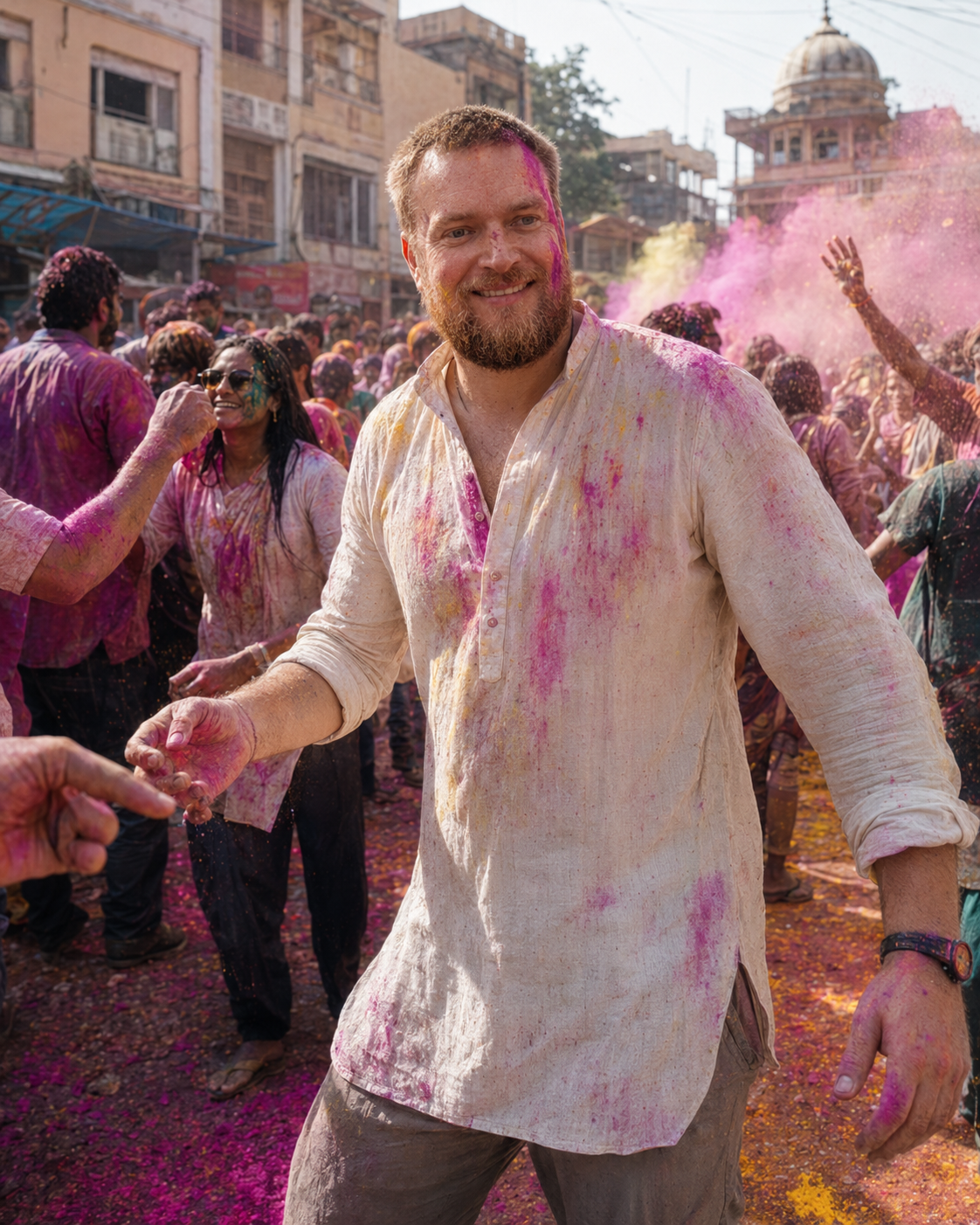
Holi in India is a vibrant celebration of spring, community and joy. An experience where you don’t just watch the festivities, you become part of them.
Holi is one of the most famous festivals in India.
For travellers, it can look joyful, colourful and impossible to ignore: people throwing coloured powder, music in the streets, water fights, celebrations, crowds and a feeling that normal rules have paused for a day.And yes, Holi can be a memorable reason to travel in India. But it is not a festival I would recommend casually to every first-time visitor.
Where you experience Holi matters. Who you are with matters. Your tolerance for crowds, noise, physical contact and unpredictability matters. So does whether you understand the setting you are entering.
Holi is not just a colourful photo opportunity. It is a religious and cultural festival with different traditions across India, usually celebrated around the full moon in the Hindu lunisolar month of Phalguna, which often falls in March.
So the real question is not only:
Is Holi worth seeing?
It is:
Is Holi the right reason to shape your India trip?
Quick answer
Holi can be worth planning around if you are genuinely interested in festivals, local culture and intense public celebrations. It can be especially memorable if you experience it in a place where the celebration has strong local meaning, such as Mathura, Vrindavan, Barsana, Varanasi, Jaipur or parts of Rajasthan. But I would be careful about making Holi the centre of your first India trip unless you understand the trade-offs.
Holi can be crowded, chaotic and overwhelming. Transport and accommodation can be harder. Some celebrations involve alcohol, bhang, loud groups and unwanted attention. For some travellers, especially solo travellers, it may feel more stressful than joyful.
My advice is simple:
Plan around Holi only if you are comfortable with intensity. Otherwise, build a good India route and treat Holi as a possible bonus if the timing works.
What is Holi?
Holi is often called the festival of colours, but that phrase only explains part of it.
The festival is associated with the arrival of spring, the end of winter, renewal and the victory of good over evil. In many places, celebrations begin with Holika Dahan, a ritual bonfire held the evening before the main colour-throwing day. The next day is when many people play with coloured powder and water.
How Holi feels depends a lot on where you are. In some places, it is playful and community-focused. In others, it can feel loud, messy and intense. In the Braj region around Mathura, Vrindavan and Barsana, Holi is deeply connected to Krishna traditions and can stretch across many days of rituals and events rather than being just one day of colour. That variety is part of what makes Holi interesting. It is also why you should not assume every Holi experience will feel the same.
What Holi is actually like as a traveller
A good Holi experience can feel joyful and disarming. People laugh, throw colours, greet strangers and pull you into the celebration. Streets can feel completely transformed. For a few hours, everyday boundaries soften. But there is another side too.
You may be covered in colour within minutes. You may be pushed, touched, photographed or pulled into groups. You may find it hard to leave once you are in a crowded area. Clothes, bags, phones and cameras can get damaged. Some colour powders can irritate skin or eyes. And in certain places, the atmosphere can become less comfortable as the day goes on.
This does not mean Holi is “bad” or unsafe by default.
Who should plan around Holi?
Holi may be worth planning around if you enjoy big public events and do not mind crowds. It is a good fit if you are interested in festivals as part of the reason for travelling, not just as something to photograph.
It may work well for you if:
you are comfortable with noise and crowds
you do not mind getting messy
you can handle a day that feels unpredictable
you are travelling with others or with a trusted local guide
you are willing to adjust your route around one fixed date
you understand that the experience may be intense
Holi can be memorable because it feels different from ordinary sightseeing. But that is also exactly why it is not for everyone.
Who should not plan around Holi?
I would be more cautious if you want a calm, controlled first India trip. Holi may not be the right focus if you dislike crowds, dislike physical contact, are worried about personal space, or prefer quiet cultural experiences.
You may also want to avoid making it the centre of your trip if:
you are travelling solo and feel unsure about crowds
you have a very tight itinerary
you are uncomfortable with messy public celebrations
you are travelling with expensive camera gear
you would be disappointed if the day feels chaotic
you mainly want peaceful temples, forts, landscapes or food experiences
There is nothing wrong with skipping Holi. A good India trip does not need to include every famous festival.
Where should you experience Holi?
There is no single best place to experience Holi.
The right place depends on what kind of experience you want.
Mathura, Vrindavan and Barsana
This is one of the most famous regions for Holi, especially because of its connection to Krishna traditions. It can be culturally rich, deeply atmospheric and very intense. Celebrations in the Braj region can include many events over several days, with large crowds and strong devotional energy.
This can be a powerful choice if Holi is a major reason for your trip. But I would not choose this area casually. You need to plan early, expect crowds and understand that this is not a soft introduction to India.
Jaipur and Rajasthan
Jaipur or other Rajasthan stops can be a more manageable option for some travellers. You may find hotel-organised celebrations, local events or more structured ways to experience Holi without throwing yourself into the most intense crowds.
The trade-off is that the experience may feel more organised and less spontaneous. That can actually be a good thing on a first trip.
Varanasi
Varanasi during Holi can be intense. The city is already one of India’s most powerful and demanding travel experiences. Adding Holi can make it even more charged. This may appeal to some travellers, but I would be careful. Varanasi should not be added just because it sounds dramatic during Holi.
If you go, give yourself time and do not arrive exhausted.
Smaller towns or local celebrations
Sometimes the best Holi experience is not the most famous one. A smaller town, a guesthouse-organised event, a homestay celebration or a trusted local connection may give you a more comfortable and meaningful experience.
This is often a better option if you are curious but not sure you want the full intensity of Mathura or Vrindavan.
How Holi affects your route
Holi has a fixed date each year, but that date changes according to the lunar calendar. In 2026, for example, Holika Dahan and Holi fall in early March, but exact observance can vary by region and calendar tradition. That means you should check the current year’s date before planning your route around it.
You should also think about the days before and after Holi. Transport can be busy. Accommodation may fill up. Some shops, sights or services may close or operate differently. Streets may be crowded. It may not be the best moment for a tight transfer or a carefully timed arrival.
If Holi is important to you, build space around it. Do not plan a major travel day immediately after the celebration unless you have to.
Safety and comfort
Holi can be fun, but it is worth being practical. Wear clothes you do not care about. Protect your phone and camera. Use sunglasses if you are worried about colour powder in your eyes. Avoid carrying valuables. Stay with people you trust. Be careful about accepting drinks or food from strangers. Leave early if the atmosphere starts to shift.
For many travellers, morning is the best time to experience Holi. The energy is high, but it may feel easier to manage before the day becomes more chaotic.
Solo female travellers should be especially thoughtful about where and how they experience Holi. This does not mean avoiding the festival completely. It means choosing a safer context: a trusted guesthouse, a guided experience, a known local family, or a more controlled celebration.
The goal is not to be fearful. The goal is to make the experience enjoyable rather than stressful.
Should you photograph Holi?
Holi is visually striking, but it is not only a photo opportunity. Be careful with your camera and with your behaviour.
People may be happy to be photographed, but that does not mean every moment is yours to capture. In religious or local settings, watch first and photograph later. Ask when possible. Avoid pushing into private or devotional moments just to get a better image.
Also remember that coloured powder and water are not camera-friendly. Sometimes the best decision is to put the camera away and actually be present.
Is Holi worth planning a whole trip around?
It can be. But only for the right traveller.
If festivals are one of your main reasons for travelling, Holi may be worth shaping your route around. It can give your India trip a strong sense of timing and place. But if you are mostly interested in a balanced first India trip, I would not let Holi decide everything.
A better approach may be:
Plan the India route that makes sense for you. Then see whether Holi fits naturally.
If it does, great.
If it does not, India has many other reasons to go.
Honest trade-offs
The biggest advantage of planning around Holi is that it gives your trip a very specific moment. You are not just visiting India. You are seeing India during one of its most recognisable festivals.
The trade-off is that your route becomes less flexible. You may need to be in a certain place on a certain date. You may deal with crowds, higher prices, transport pressure and a less predictable travel day.
Holi can be joyful. It can also be too much. Both things can be true.
Practical tips
Check the exact Holi date for the year you travel.
Book accommodation early if you are going to a popular Holi destination.
Avoid arriving in a new city late at night just before Holi.
Wear old clothes and simple shoes.
Protect your phone, camera and passport.
Do not carry more than you need.
Stay with people you trust.
Leave early if the atmosphere no longer feels comfortable.
Do not plan an important transfer immediately after the celebration.
Ask your hotel or guesthouse what Holi is like locally.
FAQ
Is Holi a good time to visit India?
It can be, but it depends on your travel style. Holi can be memorable, but it also brings crowds, noise, mess and fixed timing. It is best for travellers who are comfortable with intensity.
When is Holi celebrated?
Holi usually falls in March, though sometimes in late February, because it follows the Hindu lunisolar calendar. The exact date changes every year, so check before planning your trip.
Where is the best place to celebrate Holi in India?
Mathura, Vrindavan and Barsana are among the most famous places because of their Krishna traditions, but they can be very crowded and intense. Jaipur, Rajasthan or smaller local celebrations may be easier for first-time visitors.
Is Holi safe for tourists?
Many travellers enjoy Holi safely, but it depends on where and how you experience it. Choose your setting carefully, avoid large uncontrolled crowds if you feel unsure, protect your belongings and leave if the atmosphere feels uncomfortable.
Should solo travellers join Holi celebrations?
Solo travellers can join Holi, but they should be careful about the setting. A guesthouse event, guided experience or trusted local celebration is usually better than wandering alone into a large crowd.
Is Holi worth planning around on a first India trip?
Only if the festival is genuinely important to you. For most first-time visitors, I would plan a realistic India route first and then include Holi if the timing works.
Final thoughts
Holi can be one of the most memorable experiences in India. But it is not something I would add to a trip just because it is famous. The best Holi experience depends on context: where you are, who you are with, how crowded it is, and whether you are comfortable with the energy of the day.
For some travellers, Holi will be a highlight. For others, it may feel overwhelming. That is not a failure. It just means the festival should be planned honestly.
If you want colour, crowds, noise and a festival that takes over the day, Holi may be worth planning around. If you want a calmer first India trip, it may be better to let Holi be a bonus rather than the reason for the whole journey.
Related guides
Where Should You Go on Your First Trip to India?
India by Season: How to Choose the Right Route for the Month You Travel
North India or South India: Which Should You Visit First?
India Beyond the Obvious: 7 Routes That Are Not Just Rajasthan and Goa
