Where Should You Go on Your First Trip to Japan?
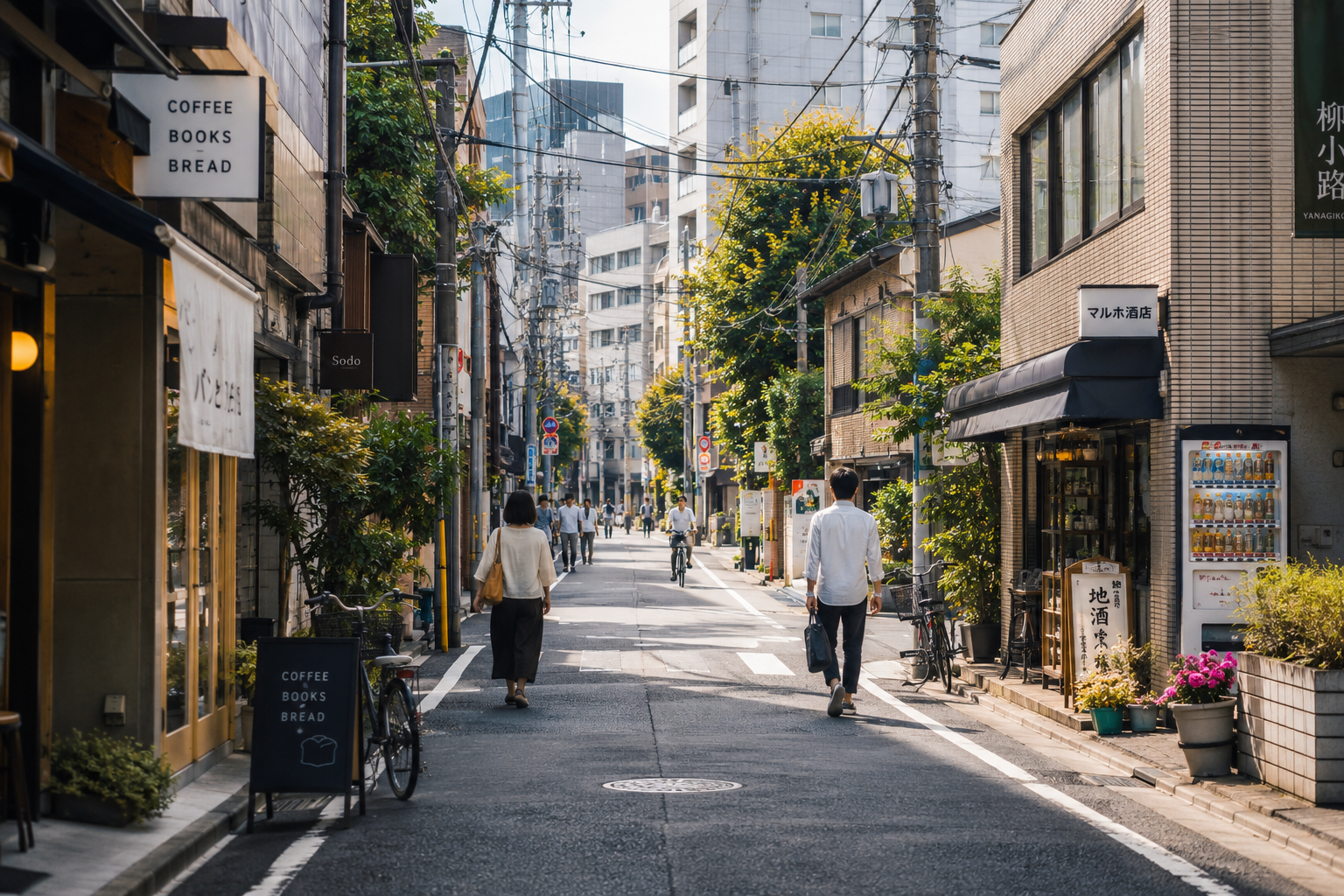
A quieter side of Tokyo: small shops, everyday streets and the kind of neighbourhood wandering that often makes a first trip to Japan feel more memorable than another packed sightseeing list.
Japan can feel surprisingly difficult to plan for a first trip. Not because it is hard to travel around. In many ways, Japan is one of the easiest countries to move through independently. The difficulty is choosing where to go.
Tokyo, Kyoto and Osaka are the obvious starting points. Add Mount Fuji, Hiroshima, Nara, Kanazawa, the Japanese Alps, Hokkaido, Kyushu or a few smaller towns, and suddenly a simple first trip becomes a long list of places that do not all fit together.
This guide is meant to help you choose the Japan route that actually suits your time, season and travel style — before you start booking trains and hotels.
Quick answer
For most first-time visitors to Japan, the classic Tokyo–Kyoto–Osaka route is the safest and most practical choice. It gives you a strong introduction to Japan’s cities, temples, food, trains, neighbourhoods and cultural highlights without requiring complicated planning. If you have around 10 to 14 days, this route usually makes sense.
But it is not the only good first trip. If you want a slower, less crowded experience, consider spending more time in fewer places or adding somewhere like Kanazawa, Takayama, Fujikawaguchiko or the Japanese Alps instead of trying to see everything.
If your main interest is food, cities and everyday Japan, Tokyo and Osaka can be enough for a shorter trip. If you want nature, small towns or a quieter route, Japan may be better with fewer major cities and more time in one region.
The best first trip to Japan is not the one with the most famous stops. It is the one that gives you enough time to enjoy the places you choose.
Who this guide is for
This guide is for you if:
you are planning your first trip to Japan
you are unsure whether to follow the classic Tokyo–Kyoto–Osaka route
you want to understand the difference between Japan’s main regions
you are trying to avoid an overpacked itinerary
you want a route that fits your travel style, not just a list of famous sights
It is not a detailed day-by-day itinerary. It is a decision guide to help you choose the right direction before you build your route.
The classic first trip: Tokyo, Kyoto and Osaka
For many travellers, the obvious first Japan route is obvious for a reason.
Tokyo, Kyoto and Osaka are well connected, easy to combine and full of places that first-time visitors often want to see. This route gives you modern Japan, historic temples, food streets, train travel, day trips and a good mix of energy and tradition.
A simple version looks like this:
Tokyo → Kyoto → Osaka
With more time, you can add:
Mount Fuji
Nara
Hiroshima and Miyajima
Kanazawa or Takayama
This is often called Japan’s Golden Route.
It works especially well if you have never been to Japan before and want a broad first impression without making the logistics too complicated.
This route works best if…
You want to see the classic highlights.
You are happy with busy cities.
You like having a clear travel structure.
You want good transport connections.
You do not mind sharing popular places with many other visitors.
You want a first trip that feels varied without being too experimental.
The trade-off
The Golden Route can feel crowded, especially in Kyoto, around major temples, popular shopping streets and famous viewpoints. It can also become rushed if you try to add too many stops.
A common mistake is planning Tokyo, Kyoto, Osaka, Nara, Hiroshima, Mount Fuji, Hakone and Kanazawa into a short trip and thinking it will still feel relaxed.
It probably will not.
If this is your first trip to Japan, the classic route is a good starting point — but it is better with fewer stops and more breathing room.
Tokyo: best for cities, food and modern Japan
Tokyo is usually the best place to start a first trip to Japan. It is huge, but it is also easier to enjoy than many people expect. You do not need to “see Tokyo” in a complete way. You just need to choose a few neighbourhoods and accept that the city is too big to cover properly in one visit.
Tokyo is good for:
food
shopping
neighbourhood wandering
museums
design
cafés
nightlife
pop culture
day trips
an easy arrival point
For a first trip, Tokyo works well because it gives you time to adjust. You can spend a few days walking through different neighbourhoods, learning how trains work, eating well and getting used to the rhythm of Japan.
This is a good choice if…
You enjoy big cities.
You like food and everyday urban life.
You want variety without changing hotels too often.
You prefer flexible days rather than a strict sightseeing route.
This may not be right if…
You dislike large cities.
You want quiet nature straight away.
You are hoping for a slow, traditional atmosphere from the beginning.
Tokyo is fascinating, but it is not gentle in size. If you are easily overwhelmed, choose one area per day rather than trying to cross the city constantly.
Kyoto: best for temples, culture and historic atmosphere
Kyoto is one of the main reasons many people want to visit Japan. It has temples, shrines, gardens, old streets, tea houses, traditional inns and a sense of history that is harder to find in Tokyo or Osaka. For a first trip, Kyoto often feels essential.
But Kyoto also needs realistic expectations. The most famous areas can be very busy. Some places feel calm early in the morning and crowded by mid-morning. The city is not a quiet museum. It is a living city with heavy tourism pressure in certain districts.
Kyoto works best if…
You are interested in temples, gardens and traditional architecture.
You are willing to start some days early.
You can stay at least three nights.
You are comfortable planning around crowds.
You want a slower cultural contrast to Tokyo.
The trade-off
Kyoto is beautiful, but it is not always peaceful.
If your idea of Japan is quiet lanes, empty temples and soft morning light, you may need to work harder for that experience than social media suggests. Staying longer helps. So does visiting less famous temples, walking away from the busiest streets and avoiding the mistake of turning Kyoto into a checklist.
For a first trip, Kyoto is still worth considering. Just do not expect every moment to feel calm.
Osaka: best for food, nightlife and an easier city base
Osaka is often treated as a quick add-on to Kyoto, but it can be a very useful base.
It is lively, food-focused and generally feels more relaxed than Tokyo. It also works well for day trips to Nara, Himeji, Kobe and parts of the wider Kansai region.
If Tokyo feels polished and enormous, Osaka can feel more direct, casual and easy to enjoy.
Osaka works best if…
You care about food.
You want a lively but less intimidating city.
You plan to visit Nara or Himeji.
You want a practical base in western Japan.
You prefer staying somewhere with nightlife and easy transport.
This may not be right if…
You only have a very short trip and are already staying in Kyoto.
You prefer quieter historic places.
You are not interested in city time after Tokyo.
For many first-time visitors, Osaka is worth at least two nights. But if you only have 7 to 9 days, you may need to choose between staying in Osaka or simply visiting it as a day or evening trip from Kyoto.
A slower first trip: fewer places, better days
A slower first Japan trip can be a very good idea. Japan’s transport is efficient, but moving between places still takes energy. You need to check out, get to the station, manage luggage, navigate platforms, arrive, find your hotel and adjust again. Doing this too often makes the trip feel more like a transport project than a holiday.
A slower 10- to 14-day first trip could look like:
Tokyo → Kyoto → Osaka
Or:
Tokyo → Hakone → Kyoto
Or:
Tokyo → Kanazawa → Kyoto
Or:
Tokyo → Japanese Alps → Kyoto
These routes give you fewer bases and more time to actually experience each place.
A slower route works best if…
You dislike rushing.
You want time for neighbourhoods, cafés, local food and slower walks.
You are travelling as a couple, family or with older relatives.
You care more about atmosphere than covering famous names.
You want your first trip to Japan to feel enjoyable, not exhausting.
The trade-off
You will miss things.
That is not a failure. It is usually what makes the trip better. Japan rewards return visits. Your first trip does not need to include every region, every famous temple and every city people mention online.
If you want nature: choose your season carefully
Japan has excellent nature, but it is easy to underestimate the role of season. Spring and autumn are popular for good reasons. The weather is often more comfortable, and landscapes can be beautiful. But they are also busy, especially around cherry blossom and autumn foliage periods.
Summer can be hot and humid in many parts of Japan, although mountain areas and Hokkaido can be better choices. Winter can be excellent for snow, hot springs and clearer views, but it changes the kind of route that makes sense.
For a first trip with nature, consider:
Hakone or the Fuji Five Lakes for a short nature add-on from Tokyo
Kamikochi or the Japanese Alps for mountains and walking
Takayama and Shirakawa-go for smaller towns and mountain scenery
Hokkaido for summer landscapes or winter snow
Kyushu for hot springs, volcanoes and a more regional feel
Nature works best if…
You have at least 12 to 14 days.
You are willing to skip one major city.
You are travelling in a suitable season.
You prefer fewer stops and more time outside.
You are comfortable with some extra planning.
The trade-off
Nature routes can be less efficient than the classic city route. You may need more transfers, buses or careful timing. Some mountain areas are seasonal. Weather can affect visibility and hiking plans. If this is your first time in Japan and you only have 10 days, a small nature add-on may work better than building the entire trip around remote landscapes.
If you travel for food: Tokyo and Osaka may be enough
Japan is one of the best countries in the world for eating well, and you do not need a complicated route to make food a central part of the trip.
Tokyo is excellent for variety, from tiny ramen shops to department store food halls, sushi counters, cafés and izakaya. Osaka is more casual, bold and easy to enjoy, especially if you like street food, late meals and lively eating districts. Kyoto has refined food traditions, tea culture, markets and seasonal dining, but it can also be more expensive and harder to approach casually in some areas.
A food-focused first trip could be:
Tokyo → Osaka → Kyoto
Or even:
Tokyo → Osaka
With day trips from each.
A food-focused route works best if…
You like cities.
You prefer eating and wandering to sightseeing lists.
You want flexible days.
You are happy exploring neighbourhoods.
You do not need to visit every famous temple.
The trade-off
A food-first trip may not feel like the full “classic Japan” route people expect.
That is fine. It may actually be a better first trip if your best travel memories usually come from markets, small restaurants, coffee shops, train stations and ordinary streets.
If you want culture: do not only think of Kyoto
Kyoto is the obvious cultural choice, but it is not the only one. Nara, Kanazawa, Takayama, Koyasan, Kamakura, Nikko and parts of Kyushu can all offer different cultural experiences. Some are easier as day trips. Others work better as overnight stays.
The key question is what you mean by culture.
If you want major temples and historic districts, Kyoto is hard to ignore.
If you want old towns and craft traditions, Kanazawa or Takayama may suit you.
If you want religion, mountain temples and a slower atmosphere, Koyasan could be worth considering.
If you want a mix of history, nature and shrines, Nikko or Kamakura may work well from Tokyo.
Cultural routes work best if…
You are willing to slow down.
You enjoy reading context before you visit places.
You do not need constant entertainment.
You are respectful around religious sites and local neighbourhoods.
You prefer depth over checking off famous photos.
The trade-off
Some cultural places are less convenient than Tokyo, Kyoto and Osaka.
That does not mean they are difficult, but they may require more deliberate planning. For a first trip, one or two cultural add-ons are usually enough.
If you have 7 days in Japan
With one week, be careful.
You do not have time for a big cross-country trip unless you want to spend a lot of your holiday in transit.
A realistic 7-day first trip could be:
Option 1: Tokyo only, with day trips
Best if you like cities and want a simpler first experience.
Option 2: Tokyo and Kyoto
Best if you want the classic contrast and do not mind moving once.
Option 3: Osaka and Kyoto
Best if flights work well and you want to focus on Kansai.
For 7 days, I would avoid adding too many extras. Hiroshima, Kanazawa, Hakone, Nara and Mount Fuji are all tempting, but not all of them belong in the same short trip.
If you have 10 days in Japan
Ten days is enough for a strong first trip, but still not enough for everything.
A practical route could be:
Tokyo – 4 nights
Kyoto – 3 nights
Osaka – 2 nights
Final night near your departure airport or back in Tokyo
You could add Nara as a day trip from Kyoto or Osaka.
You could also replace Osaka with Hakone or Kanazawa if you want a slower or more scenic route.
The main thing is to avoid turning 10 days into six hotel changes.
If you have 14 days in Japan
Two weeks gives you much more flexibility.
A classic first route could be:
Tokyo → Hakone or Fuji area → Kyoto → Osaka → Hiroshima/Miyajima
A slower route could be:
Tokyo → Kanazawa → Takayama → Kyoto → Osaka
A food and city route could be:
Tokyo → Kyoto → Osaka, with day trips to Nara, Himeji or Kamakura
A nature-leaning route could be:
Tokyo → Japanese Alps → Kyoto → Osaka
With 14 days, you can add one meaningful extra region. The mistake is adding three.
If you have 3 weeks in Japan
Three weeks allows you to go beyond the obvious route without rushing.
You could combine the Golden Route with either:
Kyushu
Shikoku
the Japanese Alps
Tohoku
Hokkaido
the Seto Inland Sea
more time in Kansai
This is where Japan becomes especially interesting. You can still see Tokyo and Kyoto, but you do not have to let them define the whole trip.
A three-week trip is also long enough to travel more slowly, stay in smaller cities and include places that are not just famous on a first-time itinerary.
Should you follow the Golden Route?
For most first-time visitors, yes — but with realistic expectations.
The Golden Route is popular because it works. It is efficient, varied and easy to plan. It gives you a good first look at Japan without making the route too complicated. But it is not automatically the best choice for everyone.
Choose the Golden Route if you want:
the classic first Japan experience
easy train connections
major cities and historic sights
a route with lots of travel information available
a safe first-time structure
Consider a different route if you want:
fewer crowds
more nature
a slower pace
smaller cities
a more regional experience
less pressure to see famous places
A good compromise is to use the Golden Route as a base, but make it slower and more personal.
You do not need to remove Tokyo or Kyoto. You may just need to stop adding so much around them.
What I would avoid on a first trip
I would be careful with any first Japan itinerary that includes too many stops (of course depending on the amount of time, you have available). I would also be careful with changing hotels every one or two nights. Japan’s transport is excellent, but frequent movement still takes time and attention.
A more realistic way to plan your first trip is to choose:
one major arrival city
one historic or cultural base
one food or city base
one nature or smaller-town add-on, if you have enough time
That is usually enough.
Practical tips for choosing your Japan route
Start with your trip length
Do not choose places first. Choose your pace first.
For 7 days, choose one or two bases.
For 10 days, choose two or three bases.
For 14 days, choose three or four bases.
For 21 days, you can add a second region.
Think about the season
Japan changes a lot by season.
Spring and autumn are popular but busy. Summer can be hot and humid, especially in cities. Winter can be excellent for snow, hot springs and clearer views, but it suits a different kind of route.
Your route should fit the month you travel.
Do not rely only on the Japan Rail Pass
The Japan Rail Pass is not automatically the best choice for every trip. Whether it makes sense depends on your route, travel dates and how many long-distance trains you plan to take.
Check current prices and compare your actual route before buying.
Stay longer in fewer places
This is the simplest way to improve most first Japan itineraries.
More time in Tokyo is rarely wasted. Kyoto improves when you are not rushing. Osaka works better when you have evenings there. Smaller towns are more rewarding when they are not just squeezed between train rides.
Leave room for ordinary days
Some of the best Japan moments are not major sights. A quiet breakfast. A train ride. A small restaurant. A supermarket. A side street. A rainy museum day. A neighbourhood you did not plan to like.
If every day is full from morning to night, you leave no room for that.
FAQ
Is Tokyo, Kyoto and Osaka enough for a first trip to Japan?
Yes. For many first-time visitors, Tokyo, Kyoto and Osaka are more than enough, especially for 10 to 14 days. You can add day trips without changing hotels too often.
Should I visit Mount Fuji on my first trip?
It depends on your route and the season. Hakone or the Fuji Five Lakes can work well as a short nature add-on, but visibility is never guaranteed. Do not build too much of your trip around one view.
Is Kyoto worth visiting if it is crowded?
Yes, but plan carefully. Stay longer, start early, visit less famous places and avoid treating Kyoto as a checklist of photo spots.
Should I stay in Kyoto or Osaka?
Stay in Kyoto if temples, gardens and historic atmosphere are your main focus. Stay in Osaka if food, nightlife, transport connections and a more casual city base matter more. With enough time, staying in both can work.
How many days do you need for a first trip to Japan?
Ten to fourteen days is a good amount of time for a first trip. One week can work if you keep the route simple. Three weeks lets you go beyond the classic route more comfortably.
Is Japan easy to travel around?
Japan is generally very easy to travel around independently, especially between major cities. The challenge is usually not transport itself, but planning a route that is not too rushed.
Should I buy the Japan Rail Pass?
Not automatically. It depends on your exact route and how many long-distance train journeys you will take. Always compare the pass price with individual ticket costs before buying.
Final thoughts
Your first trip to Japan does not need to include everything. In fact, it probably should not.
Tokyo, Kyoto and Osaka make sense for many first-time visitors, but they are not the only way to experience Japan. A slower route, a food-focused trip, a nature add-on or a smaller-city alternative can all work better depending on what you actually want from the journey.
The most important decision is not whether your itinerary includes every famous place. It is whether the route gives you enough time to enjoy being there.
For a first trip, choose fewer places than you think you need. Japan is a country many people want to return to. Let the first trip be a good beginning, not a race through everything.
