Should You Visit Japan in Summer? Honest Advice Before You Book
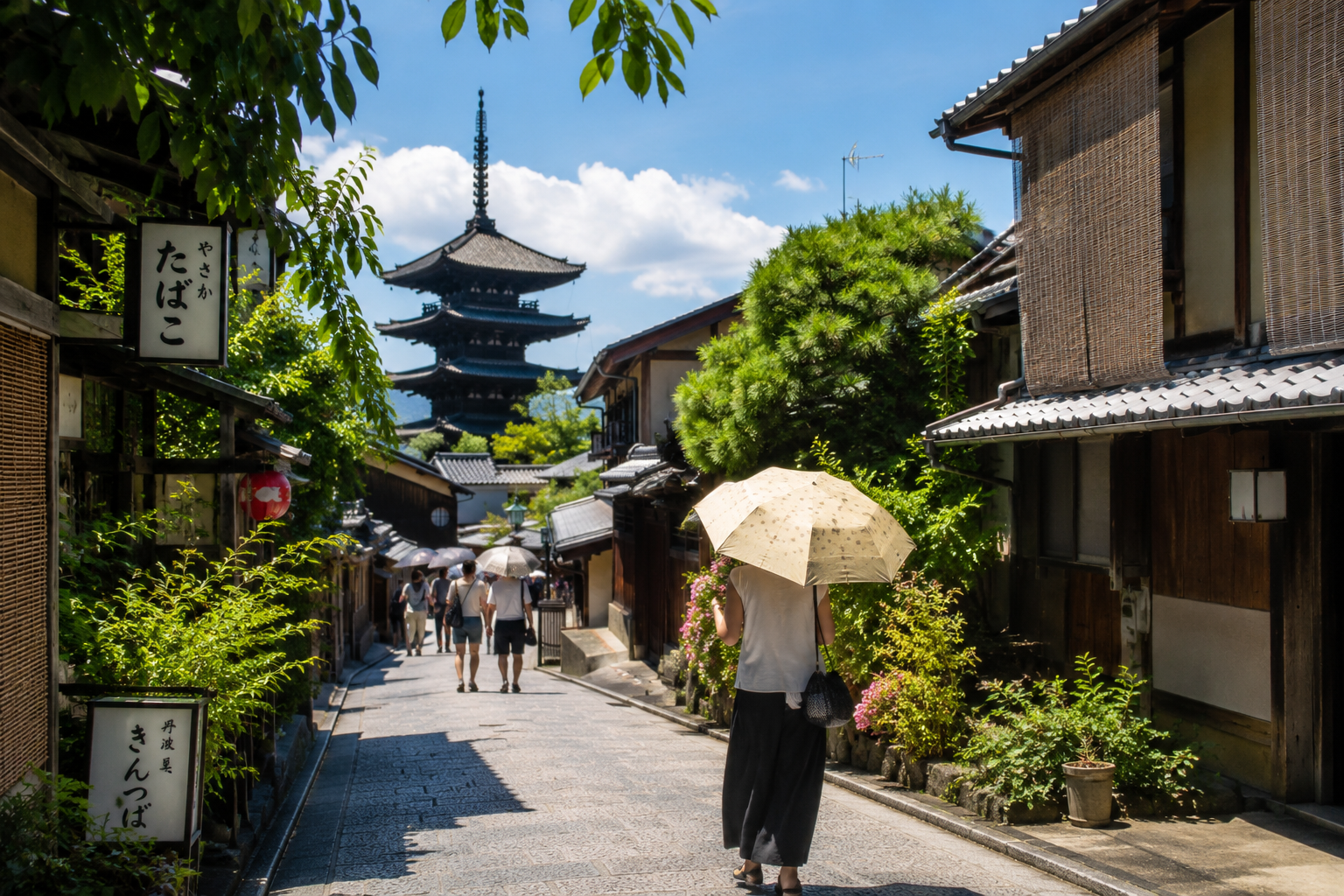
Summer in Japan can be beautiful, but the heat changes the pace. Plan for shade, slower days and the kind of breaks that make the trip feel enjoyable rather than exhausting.
Japan in summer is not impossible. But it is different from the version of Japan many travellers imagine when they start planning. The days are long, the landscapes are green, festivals take place across the country, and mountain areas open up for hiking. There are good reasons to visit Japan in summer.
The challenge is, that summer also brings heat, humidity, heavy rain in some periods, and the possibility of typhoons later in the season. In cities, the weather can make ordinary sightseeing feel much more tiring than expected. This does not mean you should avoid Japan in summer. It means you should plan with the season in mind.
Quick answer
Yes, you can visit Japan in summer, but it is not the easiest season for a first trip. If summer is the only time you can travel, it is still worth going. Just do not plan the trip as if you are travelling in spring or autumn.
You will need a slower pace, more breaks, fewer outdoor plans during the hottest part of the day, and a route that does not rely on constant sightseeing. Japan in summer works best if you are flexible, realistic and willing to adapt your days around the weather.
It may not be the right choice if you struggle with heat, dislike humidity, want to walk all day, or are hoping for a very comfortable first-time sightseeing trip.
Who this is for
This guide is for you if:
- you are considering Japan in June, July, August or early September
- you are tied to school holidays or fixed vacation dates
- you are worried about the heat
- you want honest advice before booking
- you are trying to decide whether summer is worth the trade-off
It is not a full Japan itinerary. It is a seasonal decision guide.
What summer in Japan feels like
The main challenge is not only the temperature. It is the combination of heat, humidity, sun, rain, crowds, city surfaces and long days outside.
In many parts of Japan, summer can feel heavy. You may not cover as much in a day as you expected. A short walk can feel longer. Outdoor sights can feel harder to enjoy. Busy streets and stations can become more tiring.
This matters because Japan often involves a lot of walking, even when the transport is excellent. You walk through stations. You walk between platforms. You walk through neighbourhoods. You walk around temples, gardens, markets and shopping streets.
In summer, all of that takes more energy. A good summer trip to Japan should be planned around energy, not just time.
The main trade-off
Summer gives you long evenings, festivals, green landscapes and mountain access. But it takes away some of your sightseeing stamina.
That is the real trade-off.
You may still enjoy Japan. You may still have a memorable trip. But you probably should not expect long, full sightseeing days from morning to evening.
In summer, the best plan is often:
early start → long indoor break → easier evening
That rhythm can work very well.
What works less well is trying to push through a packed outdoor itinerary in the middle of the day.
When summer in Japan can be worth it
Summer can be worth it if you know what you are choosing.
It may be a good fit if:
- this is the only time you can travel
- you enjoy warm evenings and summer atmosphere
- you are interested in festivals
- you want green landscapes
- you are considering mountains or northern Japan
- you are willing to slow down
- you do not need perfect comfort every day
Summer can also be a good season if your trip is not built only around the most famous urban sights.
If you are open to changing the pace and accepting the weather as part of the experience, summer can still work.
When summer may be the wrong choice
Summer may not be the best time for Japan if you want the easiest possible first trip. You may want to choose another season if:
- you struggle with heat or humidity
- you want to walk all day
- you are travelling with people who need a gentler pace
- you dislike changing plans because of weather
- you are hoping for clear views every day
- you want a fast-paced itinerary with many outdoor sights
- you are choosing summer only because the dates are convenient
The biggest risk is not that Japan will be bad. The risk is that the trip you planned will not match the season you are travelling in.
What to be careful with
Crowded outdoor sightseeing
Famous outdoor places can feel much harder in summer than they look online.
Heat, crowds and limited shade can make a beautiful place feel stressful if you visit at the wrong time of day.
Go early where it matters, and do not plan too many major outdoor sights in one day.
Long walks between sights
Japan is easy to travel around, but it still involves a lot of walking. In summer, small distances add up quickly. Look carefully at how much walking your days actually involve. A route that seems simple on a map may feel very different in humid weather.
Too many hotel changes
Moving around too often is tiring in any season. In summer, it can feel even heavier.
Packing, checking out, moving through stations and finding your next hotel all take more energy in the heat. A simpler structure will usually feel better.
Expecting perfect views
Summer is not always the best season for clear mountain views.
Cloud, haze and rain can affect what you see. This matters if your trip depends heavily on one famous view or one outdoor experience.
Plan for the place, not just the photo.
How to make a summer trip better
Slow the pace down. This is the most important advice.
Do less than you think you can. Leave more space between plans. Accept that one good morning and one good evening can be enough.
A slower summer trip will usually feel better than an ambitious one.
Use the middle of the day differently
The hottest part of the day is not always the best time to be outside. Use it for lunch, museums, cafés, shopping streets, train travel, hotel breaks or anything with air conditioning.
This is not wasted time. It is how the trip becomes enjoyable.
Stay near useful transport
Hotel location matters more in summer. A cheaper place far from good transport may cost you energy every day. Staying near a useful station can make the trip much easier, especially when it is hot or raining.
Build in flexibility
Summer weather can change plans.
Rain, heat alerts or storms may affect what makes sense on a given day. Avoid booking every hour too tightly.
The more flexible your plan is, the less frustrating summer becomes.
Pack for comfort, not style
Bring breathable clothes, comfortable shoes, sun protection and anything that helps you handle heat and rain.
This is not the season for uncomfortable footwear or heavy outfits.
Should you avoid Japan in summer?
Not necessarily. But you should avoid planning the wrong kind of summer trip.
Do not plan a fast, sightseeing-heavy route and expect it to feel effortless. Do not assume you can walk all day just because the distances look manageable. Do not treat heat and humidity as small details.
If you can travel in spring, autumn or winter, those seasons may be easier for a first trip. But if summer is when you can go, Japan can still be worth it. You just need to build the trip around the reality of the season.
Final thoughts
Japan in summer is a trade-off.
You get long days, green landscapes, festivals and a different seasonal atmosphere. You also get heat, humidity, rain and a slower travel rhythm.
For some travellers, that trade-off is worth it. For others, it will make the trip harder than expected.
The important thing is to be honest before you book. If you want a comfortable, full-speed sightseeing trip, summer may not be the best choice. If you are willing to slow down, take breaks and adapt your plans, Japan can still be a rewarding summer destination.
The mistake is not visiting Japan in summer. The mistake is pretending summer will not change the trip.
FAQ
Is Japan worth visiting in summer?
Yes, Japan can be worth visiting in summer if you are realistic about the heat, humidity and slower pace. It is a good choice if summer is the only time you can travel, or if you are interested in festivals, green landscapes, mountains or northern Japan.
Is Japan too hot in July and August?
For many travellers, July and August can feel very hot and humid, especially in cities. It does not make travel impossible, but it does mean you should plan fewer outdoor activities, take longer breaks and avoid overpacking your days.
Is June a good time to visit Japan?
June can work if you do not mind rain and humidity. It may be less intensely hot than July and August, but rainy-season weather can affect outdoor plans, views and sightseeing days.
Is Kyoto difficult to visit in summer?
Kyoto can be tiring in summer because many sights involve walking, outdoor temple grounds and limited shade. It can still be worth visiting, but it is better with early starts, fewer sights per day and proper afternoon breaks.
Is Tokyo manageable in summer?
Yes, Tokyo is manageable in summer if you pace yourself. It has many indoor options, good transport and plenty of places to rest, but walking-heavy days can still become tiring in the heat.
Where is cooler in Japan during summer?
Northern Japan and mountain areas are usually better choices than lowland cities in summer. Hokkaido and parts of the Japanese Alps can be more comfortable, though weather still varies and should be checked before travelling.
Should I avoid Japan in summer for a first trip?
Not necessarily. If summer is your only option, you can still have a good first trip. But if you have full flexibility and want the most comfortable sightseeing weather, spring, autumn or winter may be easier.
How should I plan my days in Japan during summer?
Plan around the heat. Start early, use the middle of the day for lunch, museums, cafés or hotel breaks, and go back out in the evening. A slower summer day is usually better than a packed one.
Are there typhoons in Japan in summer?
Typhoons can affect Japan in late summer and early autumn. They do not disrupt every trip, but they can affect flights, trains, ferries and outdoor plans, so it is worth keeping your itinerary flexible.
What should I skip in Japan during summer?
Skip overly packed sightseeing days, too many hotel changes, long exposed walks and routes that depend on perfect weather or clear views. In summer, a simpler plan usually works better.
