Should You Travel to India During Monsoon? Honest Advice for First-Time Visitors
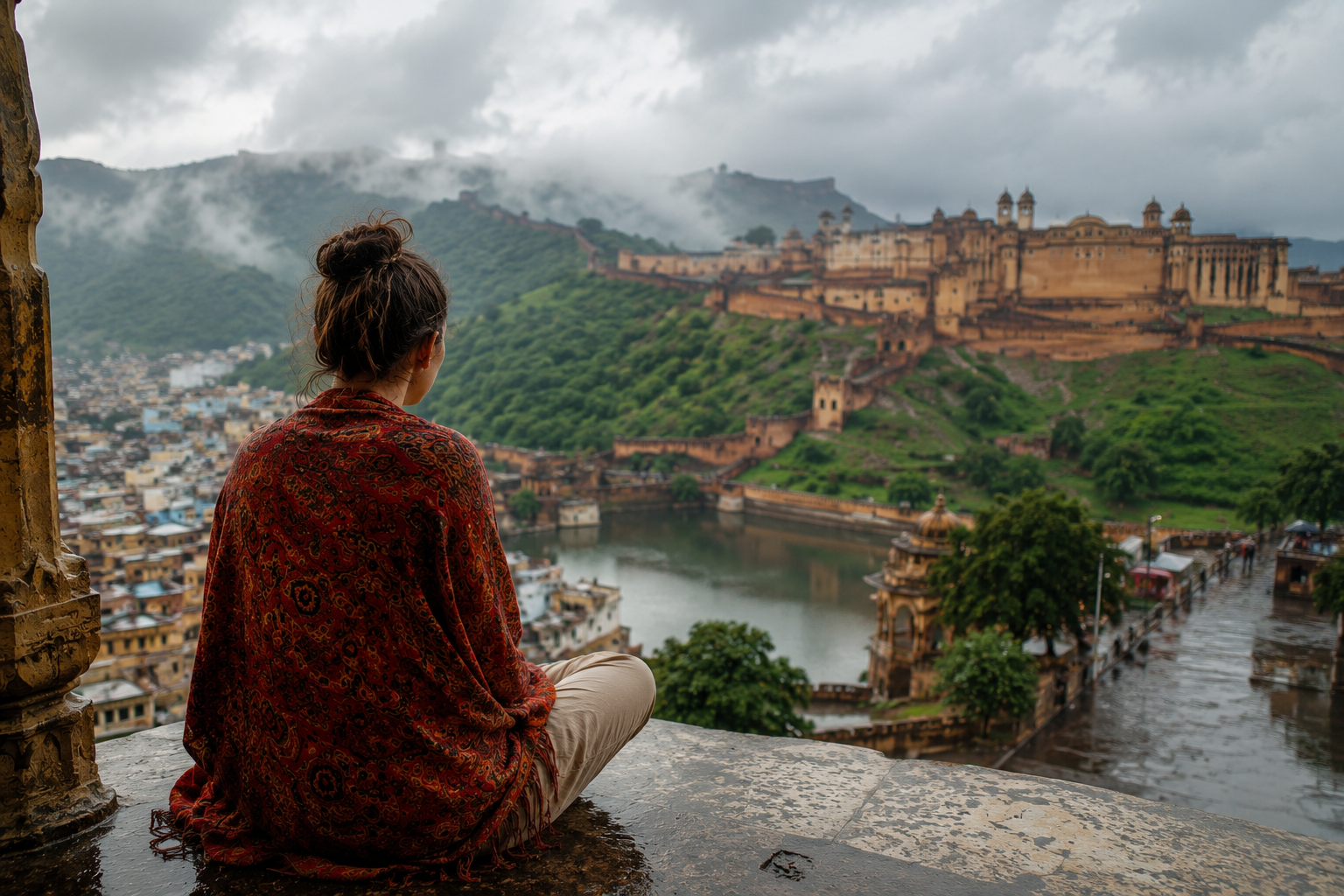
A quiet monsoon view over Rajasthan, where rain, mist and green hills show a softer side of India’s usually dry landscapes.
India’s monsoon season can sound both tempting and confusing when you are planning a trip.
On one hand, the rain brings greener landscapes, fewer tourists in some places and often lower prices. On the other hand, it can also mean humidity, transport delays, muddy streets, landslides, cancelled plans and long travel days that feel more tiring than they looked on paper.
So should you travel to India during monsoon?
The honest answer is: it depends on where you go, how flexible you are, and what kind of India trip you are hoping for.
I have travelled in India during monsoon myself, including two weeks in Rajasthan in July where I did not see a single drop of rain. That does not mean July is always dry in Rajasthan, or that monsoon is easy to predict. It simply means that “monsoon in India” is not one single travel experience.
This guide is meant to help you understand the trade-offs before you decide.
Quick answer
For most first-time visitors, the easiest time to travel in India is still the cooler, drier season from roughly November to March.
Monsoon travel can be worth considering if you are flexible, interested in slower travel, and choosing regions that make sense for the season. It is usually not the best choice if you want a smooth first trip with lots of sightseeing, tight transport connections, mountain roads, wildlife safaris or a packed itinerary.
A more realistic way to think about it is this:
Monsoon can be rewarding, but it is rarely the easiest version of India.
When is monsoon season in India?
India’s main monsoon is the southwest monsoon, which usually begins in Kerala in early June and gradually moves across the country. By July, much of India is affected by monsoon conditions, although the amount and timing of rainfall varies a lot from region to region.
In broad terms:
June is a transition month. Some places are still very hot, while others begin to see heavy rain.
July and August are usually the core monsoon months in much of India.
September can still be wet, but conditions often begin to shift.
October and November bring the northeast monsoon to parts of southeast India, especially Tamil Nadu and nearby areas.
This matters because “India in monsoon” does not mean one single thing. Kerala in July, Ladakh in July, Rajasthan in July and Tamil Nadu in November are completely different travel experiences.
Some places may be soaked. Some may be humid and cloudy. Some may have short, dramatic downpours. And some places may feel surprisingly dry for days or even weeks.
Who should consider travelling to India during monsoon?
Monsoon travel may work well if you are not trying to see everything. It can be a good fit if you like slower days, green landscapes, dramatic skies and a more atmospheric version of certain places. You may also find fewer international tourists in some regions compared with the peak winter months.
It can make sense if you have already travelled in India before and know that you can handle a bit of uncertainty. It may also work if your plan is simple: fewer stops, less rushing and enough buffer time between travel days.
The key is not to build a trip that depends on perfect weather. Monsoon is easier to enjoy when rain is allowed to be part of the experience rather than something that ruins it.
Who should probably avoid monsoon travel?
Monsoon is probably not the best choice if this is your first trip to India and you want the smoothest possible introduction. It can also be frustrating if you have limited time and a very fixed itinerary. Rain may not ruin every day, but it can make transport slower, sightseeing less pleasant and spontaneous changes more likely.
You should be especially careful if your trip depends on:
long mountain road journeys
tight train or flight connections
wildlife safaris
beach weather
trekking
photography with clear skies
moving hotels every one or two nights
This does not mean monsoon travel is impossible. It means you need to plan it differently.
The main trade-offs of monsoon travel
The biggest mistake is thinking of monsoon only as “rain”.
The rain is part of it, but the real travel impact often comes from everything around it: humidity, road conditions, transport delays, mosquitoes, damp clothes, limited views and the need to change plans.
The good side
Monsoon can make parts of India feel lush and alive. Hill stations, forests, rice fields, tea plantations and backwaters can look completely different from the dry season.
There may be fewer tourists in some places, and hotels can be cheaper outside peak season. The heat may ease in some regions, although this does not always mean the weather feels comfortable. Humidity can still be heavy.
There is also something atmospheric about travelling in India when the skies are changing, the air feels heavier and the landscape is more alive than it often is in the dry months.
The difficult side
Rain can make simple travel days longer. Roads may flood in some areas. Mountain roads can be affected by landslides. Beaches may not be suitable for the kind of relaxed sunny holiday many travellers imagine. Wildlife viewing is often poor or unavailable in some national parks during the monsoon period.
Even when it is not raining all day, the uncertainty can shape the trip. That is the real trade-off: you may get a greener, quieter and more atmospheric India, but you give up some predictability.
Monsoon does not affect all of India in the same way
This is probably the most important thing to understand. India is huge, and monsoon behaves differently from region to region. A weather app showing rain across the country does not always tell you what travel will actually feel like on the ground.
In Kerala, monsoon can mean heavy rain, lush landscapes and a slower rhythm.
In Goa, it can mean a quieter, greener version of the coast, but not a classic beach holiday.
In Ladakh, July and August are among the most popular travel months because the region lies in a high-altitude rain shadow.
In Rajasthan, July can still be hot, humid and relatively dry in some places. As mentioned, I once spent two weeks there in July without seeing any rain at all.
That does not mean Rajasthan is “safe” from monsoon. It means you should avoid thinking in absolutes.
The better question is not: “Is India rainy in monsoon?”
A better question is: what kind of monsoon does this specific region usually get, and how would that affect the trip I want?
Places where monsoon travel can make sense
Kerala
Kerala can be beautiful during the rains, especially if you are not expecting perfect beach weather. The backwaters, tea hills and coastal towns all feel different in monsoon. A slower trip with fewer stops can work well, especially if you are comfortable with rain and humidity.
This is not the best time if your main goal is beach days. But if you want a quieter, greener version of Kerala, monsoon can be worth considering.
Goa
Goa in monsoon is not the postcard beach trip. Some beach shacks close, the sea can be rough, and the weather is unpredictable. But Goa can also feel calmer, greener and more local outside the main tourist season.
It can work if you want slow days, cafés, old Portuguese-influenced neighbourhoods, rain, greenery and a softer pace. It is not ideal if your dream is swimming, sunbathing and nightlife every night.
Ladakh
Ladakh is one of the main exceptions to the classic monsoon idea because it lies in a high-altitude rain shadow. July and August are among the most popular months to visit.
That does not mean it is simple. The main issue in Ladakh is not monsoon rain in the same way as Kerala or Mumbai. The issue is altitude, road conditions, distance and the need to acclimatise properly.
Ladakh can be a strong summer choice, but it is not a casual add-on to a first India trip.
Rajasthan
Rajasthan can be possible during monsoon, but it is not the classic best-season version of the region. The heat may be less brutal than in May or early June, and the rain can bring some relief when it does arrive. Cities like Jaipur, Udaipur and Jodhpur may still be manageable if you plan carefully. But this is where expectations matter.
Rajasthan in July is not necessarily romantic rain, cool evenings and empty palaces. It can also be hot, humid and tiring. You may get rain. You may get none at all. You may get cloudy skies without much relief.
If Rajasthan is your main dream for a first India trip, November to March is usually easier. But if July is the time you have, Rajasthan is not automatically a bad idea. It just requires a realistic pace and a tolerance for heat.
Tamil Nadu
Tamil Nadu does not follow the exact same pattern as much of western and northern India. Parts of the state receive more rain later in the year during the northeast monsoon.
This means Tamil Nadu can sometimes be considered when other regions are deep into the southwest monsoon, but it is still important to check local conditions. For travellers interested in temples, culture, food and city life rather than beaches, Tamil Nadu can be a good alternative to more obvious first-trip routes.
Places to be careful with during monsoon
Some places may still be possible, but they require extra caution.
The Himalayan foothills
Regions such as Himachal Pradesh, Uttarakhand, Sikkim and parts of the Northeast can be beautiful, but monsoon can bring landslides, road closures and difficult travel conditions. This does not mean you can never go. But you should avoid planning a tight mountain itinerary with no buffer days.
If mountain roads are a major part of the trip, check current conditions before committing.
Wildlife parks
Monsoon is usually not the best time for tiger safaris.
Many national parks close for part of the rainy season, and wildlife sightings are generally less predictable. If seeing tigers is a major reason for your India trip, plan around the safari season instead of trying to fit it into a monsoon route.
Beach destinations
Some beach areas are cheaper and quieter in monsoon, but that does not mean they offer a classic beach holiday.
The sea may be rough, swimming may be unsafe, and many seasonal businesses may close. Choose beach destinations in monsoon for atmosphere and slow travel, not guaranteed sunshine.
Big cities
Cities like Mumbai, Delhi and Kolkata can all be intense in different ways during the rainy season. Mumbai in particular is closely associated with heavy monsoon rain. This can be atmospheric, but it can also mean flooding, traffic and delays.
A city stay can still work, but avoid building your whole itinerary around moving quickly through major cities during heavy rain.
How to plan a monsoon trip more realistically
The most important rule is to leave space in the itinerary.
Do not plan every day tightly. Do not assume every road journey will take the optimistic time shown online. Do not book risky same-day connections after long drives.
A few practical rules help:
Stay longer in fewer places.
Add buffer days before international flights.
Avoid remote mountain roads during active heavy rain.
Check local weather and transport updates close to travel.
Pack quick-dry clothing and waterproof protection for electronics.
Choose accommodation with good reviews for access, location and backup power.
Be careful with street flooding and waterlogged areas.
Expect plans to change.
Monsoon travel rewards flexibility more than ambition.
What many guides do not mention
Many monsoon travel articles focus on how beautiful India looks in the rain. That can be true. But beauty is only one part of the experience.
A place can be green and still be difficult to move around. A hotel can be cheaper and still feel damp. A famous viewpoint can be open and still have no view. A route can be possible and still not be a good idea for a first-time visitor with limited time.
At the same time, monsoon is not always as dramatic as people imagine. You might travel for days without rain. You might only get short showers. You might find that the heat and humidity affect your trip more than the rain itself.
This is why the question should not only be: “Where is beautiful in monsoon?”
A better question is:
Which places still make practical sense in monsoon for the kind of trip I want?
So, should you travel to India during monsoon?
You should consider it if you are flexible, curious and comfortable with a less predictable trip.
You should be careful if this is your first time in India and you want a smooth, classic route.
You should probably avoid it if you want beaches, safaris, trekking, packed sightseeing days or a tight two-week itinerary across several regions.
For many first-time visitors, the best answer is simple: travel between November and March if you can. But if monsoon is the only time you can go, India is not off-limits. You just need to choose the right region, slow the trip down and accept that the season will shape the journey in some way — even if that does not always mean rain every day.
FAQ
Is monsoon a bad time to visit India?
Not always. It depends on the region and your expectations. Monsoon can be beautiful in some places, but it also brings more uncertainty. For a first trip, it is usually less straightforward than the cooler, drier months.
Does it rain every day during monsoon in India?
No. Monsoon does not usually mean constant rain everywhere, every day. Some places may have heavy daily rain, while others may have short showers, cloudy weather, humidity or surprisingly little rain.
Which part of India is best during monsoon?
Kerala, Goa, Ladakh, parts of Rajasthan and some parts of South India can all make sense depending on the month and travel style. The best choice depends less on the most beautiful place and more on how much rain, humidity, altitude or transport uncertainty you are willing to handle.
Is Kerala worth visiting in monsoon?
Kerala can be worth visiting during monsoon if you want a greener, slower and quieter trip. It is not the best choice if your main priority is sunny beach weather.
Is Goa worth visiting in monsoon?
Goa in monsoon is good for slow travel, greenery, cafés and atmosphere. It is not ideal for swimming, beach parties or guaranteed sunshine.
Is Ladakh affected by monsoon?
Ladakh is less affected by the main monsoon than many other parts of India because of its high-altitude desert climate. However, travel still requires careful planning because of altitude, road conditions and long distances.
Can I visit Rajasthan during monsoon?
Yes, Rajasthan can be visited during monsoon, especially with a slower pace. But it is generally more comfortable in winter, particularly for first-time visitors. July and August may bring some rain, but they can also be hot, humid and much drier than expected.
Should I visit India in July or August?
July and August can work if you choose the right region and avoid overplanning. They are not the easiest months for a classic first India route, especially if you want to cover several regions quickly.
Final thoughts
Monsoon is not the wrong time to visit India. It is just a different kind of trip. It asks for more patience, more flexibility and more realistic planning. It can give you green landscapes, quieter places and a slower rhythm, but it can also make travel more tiring and less predictable.
It also rarely matches the simple idea many travellers have of “rainy season”. Sometimes the rain is constant. Sometimes it comes and goes. Sometimes the bigger challenge is humidity, heat or transport. If you want the easiest first trip, choose the dry season.
If you are open to a less polished version of travel, monsoon can be rewarding — as long as you plan the trip around the season instead of pretending the season will not matter.
