When Should You Fly Instead of Taking the Train in India?
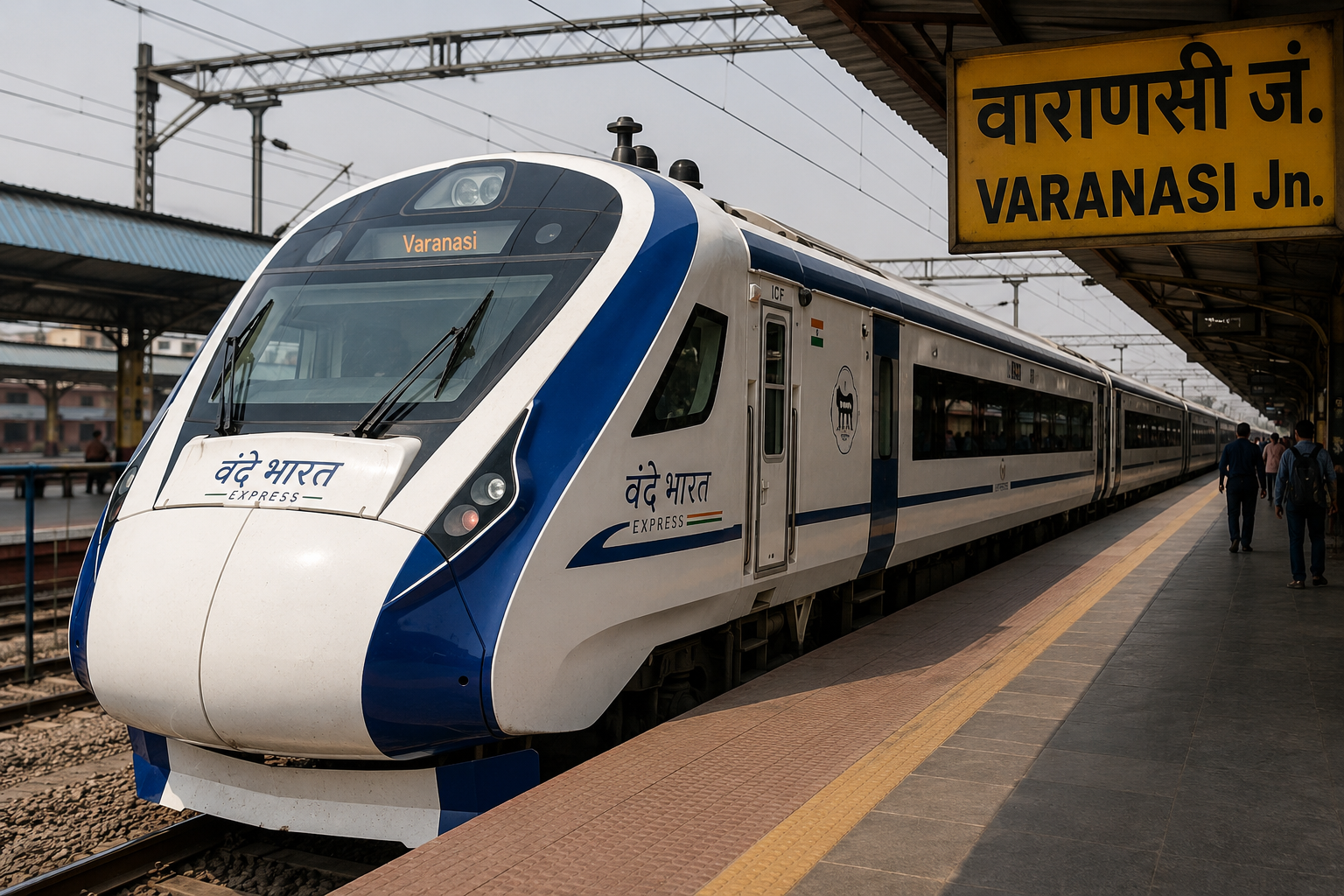
A Vande Bharat train at Varanasi Junction. India's new semi-high-speed trains are making rail travel a more realistic alternative to flying on several medium-distance routes.
Few travel decisions shape an India itinerary as much as transport.
Many first-time visitors arrive with romantic images of overnight train journeys, chai sellers moving through carriages, and endless landscapes rolling past the window. Train travel is undeniably part of the India experience. For many travellers, it becomes one of the highlights of the trip.
But what many guides do not mention is that trains are not always the most sensible choice.
India is vast. Distances are often greater than they appear on a map, delays happen, and a journey that looks manageable on paper can quickly consume an entire travel day. In some situations, flying simply makes more sense.
The challenge is knowing when a train journey adds to the experience and when it becomes an exhausting logistical exercise.
Quick Answer
Take the train when the journey itself is part of the experience, when distances are moderate, or when overnight travel saves both time and accommodation costs. Fly when distances are very long, when your time is limited, or when a train journey would consume a disproportionate part of your trip.
As a general rule, if a train journey takes significantly more than 12-14 hours and you only have two or three weeks in India, flying is often the more realistic option.
My short thumb of rule is:
Choose trains for journeys of up to 8-10 hours during the day, especially if a Vande Bharat service is available.
Choose overnight trains for journeys of 10-14 hours if you enjoy slower travel.
Consider flying if the journey exceeds 14-16 hours and you have limited time.
If this is your first trip to India, I would be careful with planning multiple consecutive overnight trains.
Most first-time visitors underestimate how tiring long-distance transport in India can become.
Why This Decision Matters
India is not one destination. It is a subcontinent-sized country.
Many first-time visitors attempt ambitious itineraries:
Delhi → Jaipur → Agra → Varanasi → Rishikesh → Mumbai → Goa → Kerala.
On paper, this can look perfectly achievable.
In practice, transport often becomes the dominant part of the trip.
What many travellers do not realise is that every transport day has a cost:
time
energy
flexibility
comfort
Choosing trains simply because "that's what you do in India" is rarely the best strategy.
Instead, transport should support the trip you want to have.
When the Train Is Usually the Better Choice
When the Journey Takes Less Than 8-10 Hours For medium-length journeys, trains are often the easiest and most enjoyable option.
Examples include:
Delhi to Jaipur
Jaipur to Jodhpur
Agra to Varanasi
Kochi to Trivandrum
Chennai to Madurai
These journeys are long enough to experience Indian rail travel but short enough that they do not dominate your itinerary. In practice, trains on these routes often feel less stressful than flying. You avoid airport transfers, security procedures and long waiting times.
When You Want the Experience
There is a reason train travel occupies such a central place in narratives about India. Watching landscapes change, sharing a compartment with Indian families and slowly moving across the country can provide insights that domestic flights never will.
For many travellers, one or two train journeys become some of their strongest memories.This route works best if you enjoy slow travel and view transport as part of the experience rather than simply a way of getting from A to B.
When an Overnight Train Replaces a Hotel Night
Overnight trains can be highly efficient. A journey from Delhi to Jaisalmer, Varanasi to Kolkata or Bangalore to Goa may save both time and accommodation costs.
The trade-off is comfort. Some travellers sleep surprisingly well on Indian trains. Others barely sleep at all. If you already know that you struggle to sleep on planes, buses or trains, I would be cautious about building an entire itinerary around overnight rail journeys.
How Vande Bharat Trains Are Changing Travel in India
One thing worth considering is that India's new Vande Bharat trains are gradually changing how travellers move around the country. These modern semi-high-speed trains are significantly faster and more comfortable than many traditional services. They offer air-conditioned seating, onboard catering and a much smoother travel experience than many first-time visitors expect. On certain routes, Vande Bharat trains now make train travel a realistic alternative to flying.
Examples include:
Delhi to Varanasi
Delhi to Dehradun
Mumbai to Ahmedabad
Chennai to Mysore
Chennai to Coimbatore
For journeys of around 5-8 hours, a Vande Bharat train can often be more convenient than flying once airport transfers and security procedures are taken into account.
However, there are still limitations. The network continues to expand, but Vande Bharat services only operate on selected routes. They are also daytime trains only, so they do not replace overnight sleeper services on longer journeys.
For many travellers, the most realistic approach is a combination of all three transport options:
regular trains for classic overnight journeys
Vande Bharat trains for medium-distance daytime travel
domestic flights for very long distances
This often creates a more balanced and less exhausting itinerary.
When You Should Consider Flying Instead
When Distances Become Extremely Long
India is much larger than many visitors expect.
For example:
Delhi to Kochi by train can take around 48 hours.
Kolkata to Goa may take well over 30 hours.
Delhi to Guwahati often requires around 30 hours by rail.
If you only have two or three weeks in India, these journeys can consume a significant part of your trip.
A more realistic way to plan this would be to fly and spend those extra days exploring on the ground.
When Time Is Limited
If you have:
10 days
two weeks
a maximum of three weeks
your itinerary should usually prioritise depth over distance. Many first-time visitors underestimate how exhausting constant movement becomes. Flying between distant regions often allows you to slow down once you arrive.
For example, rather than taking multiple long trains from Rajasthan to Kerala, flying between Jaipur and Kochi may give you an extra two or three days in Kerala.
That is often a worthwhile trade-off.
When You Are Combining Very Different Regions
Some route combinations almost always justify a domestic flight.
Examples include:
North India + Kerala
Delhi to Kerala is a long overland journey.
Unless slow travel is one of your main goals, flying usually makes more sense.
Rajasthan + Northeast India
Travelling overland between these regions can become an itinerary in itself.
Flying is usually the more practical option.
Central India + South India
Wildlife-focused routes in Central India often combine well with a domestic flight to South India.
Routes Where Flying Usually Makes More Sense
Delhi to Kerala
Delhi to Goa (unless you specifically want a long train experience)
Kolkata to Kerala
Delhi to Northeast India
Rajasthan to Kerala
Routes Where the Train Usually Makes More Sense
Delhi to Jaipur
Jaipur to Jodhpur
Kochi to Alleppey
Chennai to Madurai
Agra to Varanasi
Delhi to Varanasi
What Many Guides Do Not Mention
Flying Also Takes Time
A one-hour domestic flight is rarely a one-hour journey.
You still need:
airport transfers
security checks
waiting time
baggage collection
The total journey often takes four to six hours.
This is why trains remain attractive on shorter routes.
Not All Trains Are Equal
India has many different train categories.
Express trains, premium trains and slower regional services offer very different experiences.
Research your specific train rather than assuming all rail travel is similar.
Booking Can Be Competitive
Popular routes and seasons sell out. If train travel is important to you, booking well in advance is often necessary.
Common Mistakes
Planning too many overnight trains.
Choosing trains simply because they seem more "authentic".
Underestimating travel times.
Trying to cover both North and South India entirely overland in a short trip.
Ignoring fatigue when planning itineraries.
Assuming a sleeper train automatically means good sleep.
Honest Trade-Offs
Train Travel
Pros:
memorable experience
lower cost
less airport stress
opportunity to observe everyday life
Cons:
slower
occasional delays
sleep quality varies
advance booking often necessary
Domestic Flights
Pros:
save significant time
ideal for long distances
useful for short trips
Cons:
airports add stress
less immersive
higher environmental impact
can encourage overambitious itineraries
Practical Planning Tips
Include at least one train journey on your first India trip.
Avoid more than two consecutive overnight trains.
Fly between distant regions if you have less than three weeks.
Check whether a Vande Bharat train operates on your route before booking flights.
Build buffer days around important international flights.
Always check current schedules before travelling.
FAQ
Should first-time visitors take the train in India?
Yes. One or two train journeys are usually worth including. They often become memorable parts of the trip.
Is flying in India expensive?
Domestic flights can be surprisingly affordable when booked in advance, particularly on major routes.
Are overnight trains worth it?
They can be, especially on medium- to long-distance routes. However, comfort levels vary significantly.
How many train journeys should I include on a two-week India trip?
For most first-time visitors, two or three train journeys are enough.
Should I travel from North India to Kerala by train?
For most travellers with limited time, flying is usually the more realistic option.
Final Thoughts
The question is not whether trains or flights are better. Both have a place in an India itinerary. Train travel can be one of the most rewarding experiences in India. But not every journey needs to happen by rail. If a train adds meaning, atmosphere or efficiency to your trip, take it. If it simply adds exhaustion, consider flying instead.
The best India itineraries are rarely the ones with the most train journeys. They are the ones that strike the right balance between experience, time and energy.
Related guides
Where Should You Go on Your First Trip to India?
India by Season: How to Choose the Right Route for the Month You Travel
North India or South India: Which Should You Visit First?
Kerala Beyond the Backwaters: A Route from Bangalore to Kochi
India Beyond the Obvious: 7 Routes That Are Not Just Rajasthan and Goa
